- Source column 8, spans 15 columns
Crimes comitted by the former revolutionary leaders after 1965
- Source column 1, spans 27 columns
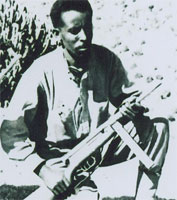
Following the liquidation of the military wing of the ELM, a number of ELM members joined the ELF (Sherman, 1980:42) Seyoum []. To mention a few of them:Saleh Eyay, Tuku etc.
- Source column 17, spans 2 columns, spans 2 rows

- Source column 1, spans 3 columns, spans 4 rows
- Source column 5, spans 4 columns

- Source column 10, spans 2 columns

- Source column 14

- Source column 21, spans 4 columns

- Source column 5, spans 4 columns
Tiku Yihdego
- Source column 10, spans 2 columns, spans 2 rows
Mahmmod Ismael Al-Haj
- Source column 13, spans 3 columns, spans 2 rows
Teklay Haraka
- Source column 17, spans 2 columns, spans 2 rows
Saleh Eyay
- Source column 21, spans 3 columns, spans 2 rows
Mehari Debessai
- Source column 1, spans 5 columns
Mohammed Burhan Nagash
- Source column 1, spans 25 columns
By the middle of 1965, the number of fighters in the ELF had increased from 800 fighters in 1964 to 2,000. This was because of the following factors: 1. A three-day strike of secondary school students in Asmara from March 8-12 , 1965 which caused about 2, 000 students to be detained on the outskirts of Asmara ( Ammar, 1997: 71). Many of those who participated in the strike joined the ELF in that year.
2. After the liquidation of the military wing of the ELM in 1965,many members of Haraka joined the ELF without trying to revitalize its organization. Gebre-Medhin (1989:171) states that with the demise of Harakat (Mahber Shewate) workers and intellectuals who had belonged to it turned to open resistance. He adds that in a matter of a few years the social composition of the fighting forces began to change. Pool (2001:52) and Ammar (1997:75) also point out that most of those who joined the ELF army in the mid-1965 came from the Christian and Muslim population who were better educated, or workers who were Harakat members but their arrival created tension and conflict in the organization. The conflict arose between the new comer who were used to be a member of Haraka, Young Federalists, Muslim Youth, Teacher Association and the banned trade union who belief that belief that “Muslims and Christians are brothers, and their unity makes Eritrea one, and ELF leaders who hated ELM because of their secular (Iyob, 1995:102).
According to Breaketeab(2000:184) Idris Mohammed Adem in particular, dislike the stretegy of the ELM to broaden its organisation through recuriting Christians. Because of this attitude of the ELF founder leaders, the ELF was founded on fostered religious antagonism and fanned backward differences and sentiments, of a regional and ethnic nature which is still left some its trace among the leader of the opposition groups. The Supreme Council of the ELF leadership also instead of working for the unity of the Eritrean Liberation Army deliberately divided it by region and ethnicity through establishing five military zones based on a territorial division
- Source column 1, spans 26 columns
In 1965 when the Supreme Council of the ELF divided the Eritrean Liberation Army into five zones, Ato Woldeab and Ato Ibrahim were concerned at its consequences and both of them sent a message of unity and reconciliation to the Eritrean Liberation Army. This period (1965-1968) of division in the history of the Eritrean armed struggle is called Zemene Kiflitat
- Source column 3, spans 21 columns
This is an excerpt from what Ato Woldeab wrote when Ato Ibrahim died
- Source column 3, spans 17 columns
Do you remember in 1965, when our revolutionary children became splintered into five factions because of the evil machinations of their leaders and that this division was deteriorating into a civil war that caused us much alarm and concern and that we went to discuss the matter with our Syrian friends to Damascus where they gave us a warm welcome and arranged for us to transmit our advice to our revolutionary children by radio, and that we, you in Tigre and myself in Tigrigna, managed to send our message of unity and reconciliation?Read more
- Source column 1, spans 25 columns
Despite of the above message, the regional-based military structure had created mutual suspicion and hatred among the fighters and its consequence can be seen from the examples below.
- Source column 1, spans 26 columns
For example, Osman Hishal, deputy commander of the fifth zonal division, summarily executed twenty-seven Christian fighters alleging either poor performance or the military setback from which they suffered. (Paice 1994 ; Mar kakis, 1987; Sherman, 1980). Ammar (1997:82) also mentioned that Ghilai who was a political cadre in the 5th Zone also was killed by an ELF unit leader in 1967. Probably he was one of those 27victim who were executed by Osman Hisha.
Another negative feature of the history of the ELF was the mistreatment of three hundred Christian fighters, who were at the time referred to as " Sriya Addis Abeba" because most of them came from Addis Abeba. On mere suspicion of being Ethiopian agents alone, these fighters were made to endure unbearable torture at the hands of ELF interrogators; a large number of them were also summarily executed (Paice 1994: 34; Human Rights Wartch 1991: 47; Mengesteab 2005: 43). Another source indicates that the exact number of the victims is not known. Issayas was one of the member of Kiada al Ama leadership who should be blamed for the massacre of those students in 1969. Paice (1994, 34) added that Wolday Giday and Kidane Kiflu, two prominent ELF members were also killed in Kassala by comrades.
- Source column 1
- Source column 4, spans 18 columns, spans 3 rows
- Source column 1, spans 2 columns
- Source column 4, spans 7 columns
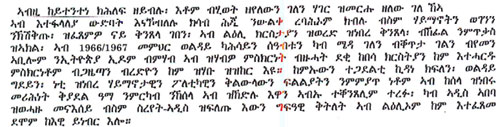
Source Tesfay 2004
- Source column 7, spans 11 columns
The ELF and EPLF leaders conspiracy of killing fighters in the 1970s and 1980s
- Source column 7, spans 14 columns
EHREA Eritrean Human Rights Electronic Archive © 2006 Contact: rkidane@talk21.com
HTML English
Crimes comitted by the former revolutionary leaders after 1965
Descriptive archival label; editorial title review pending.
Original source ↗http://www.ehrea.org/AFTER65.htm
Read in the document library →
Shared passages in the archive
These passages also occur in other preserved documents. Each link keeps its own source, language and context.
Read passage and 14 other preserved contexts
EHREA Eritrean Human Rights Electronic Archive © 2006 Contact: rkidane@talk21.com- 4.3 Lists of execution of some prisoners and others since 1991
Passage provenance
Record ID:
17773010b58ad9e1e456fb56Original source: http://www.ehrea.org/excupj.htm
Original SHA-256:
4c6f1a7cfe50f9aa95a2c0f27462aa7e39afb14c37071ab3b81883024bbc79b1 - Purge EPLF
Passage provenance
Record ID:
2b88950ec3a803bbacc181b7Original source: http://www.ehrea.org/purgeeplf.php
Original SHA-256:
6d6f43f7b41dce3a7f21d60ec3f2341cf62440783133cbbcfb997cfd6a62a465 - atrocities committed against civilians by the Ethiopian government
Passage provenance
Record ID:
38fe2ef845d1598c51f7428bOriginal source: http://www.ehrea.org/ethicrime.php
Original SHA-256:
4fd0508a09c489f54064e573f6d8320e2c3b0fa6ee16746eaa20a73a9460a8fe - The ELF leaders' crimes against the Haraka fighters in 1965
Passage provenance
Record ID:
4159552f6da8b3eb70479bfdOriginal source: http://www.ehrea.org/crimeharaa.php
Original SHA-256:
1073c3526202da4c8f178a5f0c10482a7bb95482b96919fead7a01dd0baa8415 - Haraka fighters in 1965
Passage provenance
Record ID:
431612c43f67f533acd60a86Original source: http://www.ehrea.org/crimeharaa.htm
Original SHA-256:
33419136b59c863816d2d350e7a4556cd4095ecf6205f83723da85f55d810343 - Crime committed against civilians by the EPLF and ELF in the 1970s
Passage provenance
Record ID:
4700d030e580f3f238cecdd2Original source: http://www.ehrea.org/civilan.htm
Original SHA-256:
47086a7894c4b2439f5f0bf1d60d4929d8d54c5a830a4d325f04fff2fb9a7925 - Crimes committed against ELF fighters by the EPLF in the 1980s
Passage provenance
Record ID:
53a9b1f3135d669d5515d215Original source: http://www.ehrea.org/EPLFSUDAN.htm
Original SHA-256:
5c05e2a05534be5915d937bd177dbaabc904ab8ffcbd7941f8a4bfbeb46cdb61 - Chronological evidence of atrocities committed against civilians by the Ethiopian government from
Passage provenance
Record ID:
7216544c90c2cd4de804b3afOriginal source: http://www.ehrea.org/ethicrime.htm
Original SHA-256:
f69e263fe185e8d00b145655b789e531936ec6d8abfd6f213a9d58c8cbd9f4fe - ህ ግንባርን ጀብሃን፣ ብዘይካ ናይ ስልጣን ቁርቊስ ናይ ስነ ሓሳብ ፍልልይ ኣይነበረንን። ብሰንኪ ዘይሓላፍነታውያን ከዳዓት መሪሕነት ናይ ክልቲኡ ውድባት ክንደይ ንጹሕ ተጋደላይ ጸኒቱ።
Passage provenance
Record ID:
785838c3304e4d863b8e6ff8Original source: http://www.ehrea.org/civiwar.php
Original SHA-256:
3344c6e351bd5ad2f8bb3b17589193262602646ee3dd0a49cfa7f7daf354be08 - 4.2 Brief information on prisons and victims
Passage provenance
Record ID:
8572eaf98b503694b66371d7Original source: http://www.ehrea.org/prisonpj.htm
Original SHA-256:
e278c77f6dbc6f9dd87e8b6e73900e9564b5d1f3d2e69f121eb655bc610dea13 - Archived reference: “1950s Youth movement's experience”
Passage provenance
Record ID:
8575bcc38c13e9fe483a03ddOriginal source: http://www.ehrea.org/tuku.htm
Original SHA-256:
aaa8f4f28ff00d6daeb42082045bb7ccc8e15c8ef4cc8530cab840e2126c55c3 - Purge and liquidation in the EPLF 1973-1980
Passage provenance
Record ID:
a1bf412648454f612ad98f4cOriginal source: http://www.ehrea.org/purgeeplf.htm
Original SHA-256:
49035f07d71984619bef263f3d9005598d57b7308f9065250554905557e36077 - <span class="txttitle">The Eritrean Liberation Movement (Mahber Shewate Haraka)
Passage provenance
Record ID:
f94d517a6cc7961343d4e395Original source: http://www.ehrea.org/haraki.htm
Original SHA-256:
430addcb62cffbfe3def93c6bbb54b6f1af18cbdd57c796bd0b7dddc77341aab - The mysterious death of Abraham Twelde in May 1970 which is still secret for most of us.
Passage provenance
Record ID:
fc4d621ae7d320b75c52541eOriginal source: http://www.ehrea.org/furtherinformation.htm
Original SHA-256:
8dbad993d21a8e9e4b9f6d7642ed696f256e7fbd60421a9ec85f72544d8f1b6e