- Source column 1, spans 17 columns
Chronological evidence of atrocities committed against civilians by the Ethiopian government from 1950s to 1990s
- Source column 1, spans 17 columns
1950s
Brief background information to the resistance to the Ethiopian government and its crimes in 1950s.
The Ethiopian government's crimes against innocent civilians and nationalists have a history going back to the late 1940s. In 1949 Abdulkader Kebira was assassinated by Andenete terrorist's operating under Ethiopian control during 1947-1950.
In the 1950s when Eritrea had a Federal Constitution, it contained a list of fundamental human rights prescribed by UN resolution. The question of respect for human rights and freedom of others under this Constitution of December 1950 was highlighted by Clarence (1955). Despite this fact, the Ethiopian government began to interefre into the Eritrean judical system after two weeks the government of Eritrea was formed. Regarding this Fessehatzion (1998:36) stated that Proclamation 130 issued in Addis Ababa by an Imperial decree, this Proclamation was designed to undermines the independence of the judicial system in Eritrea. Artcle 4 of the Proclamation stated that cases decided by the Eritrean Supreme Court could be appealed to the Federal High Court, although the Federal Acts and the Eritrean constitution had explicitly stated that inEritrea the Eritreans Supreme Court was the court of last resort. Furthermore, Proclamation 130 stated that the Ethiopian Court had the right to pass judgement on laws and other decisions passed by the Eritrean Assembly.Fessehatzion (1998: 39)added that the press, particularly the Voice of Eritrea, was unrelenting in its attack on the Proclamation as an intrusion in Eritrea's autonomy. Omar Kadi, who saw a serious problem in Ethiopia's unilaterial decisions. He warned that what Ethiopia was doing on the eve of the establishement of the Eritrean government was a harbinger of an uncertain future.
On September 30, 1952, Proclamation number 130 was issued by Emperor, declaring the federal Ethiopian court to be the territory's final court of appeal. This was in violation of Articles 85 and 90 of the Eritrean Constitution.
Towards the end of 1952, La voce dell’ Eritrea, a newspaper critical of federation, was closed down.
In 1953 the newly founded Eritrean General Union of Labor Syndicates, which had 4, 000 paid members and 6,000 more associate members, was banned.
In 1953, the Empire tightened its control by passing a law that required all males in urban areas to carry idenity card at all time
The British Police Commissioner of Eritrea, Colonel Cracknell, reported that by 1953 “the more fanatic of the young Unionists, formerly of a ‘union or die’ attitude, have now changed their cry to’Federation or die( Bereketeab 2000:176). Omar Kadi, jurist , former President of the IML, and editor of the pro-unionist newspaper Andinet'nMe'belnaan/Unione e Progresso(Union and Progress) was one of the few members of the Eritrean Assembly to lodge a letter of protest to the President of the Assembly, on May 25, 1953. In this letter he pointed out that the legal maneuvers of the federal government were unconstitutional and eroded Eritrea's autonomy (Iyob 1995:.89]
Another assassination attempt on the life of Ato Wolde-Ab Wolde-Mariam was made in 1953. The families of Ras Tessema Asberom were harassed-notably Abraha Tessema, who was incarcerated on a frameup charge of conspiring to assassinate Ato Tedla Bairu.(Gebre-Medhin 1989:160)
Abusing the powers of his office, Ato Tedla Bairu moved against his political opponenent. Dej. Abraha Tessema..was arrested and Ato Wolde-Ab Woldemariam was so harassed that he fled to Cairo...and later(was) joined by Ibrahim Sultan
- Source column 1, spans 6 columns
...I also have in me the courage to die for my political beliefs, for the cause of liberty of my country, and for the genuine interest of my brothers and sisters." Woldeab Woldemariam in Hanti, Eritrea, Issue#, August 22, 1951
- Source column 7, spans 3 columns

- Source column 10, spans 3 columns
A man is arrested in the street without law or ordinance and is imprisoned without justice and leaves prison without justice. As proof it is possible to cite the injustice against Dejatch Abraha Tessemma and his family, of which you will have heard".(see letter's 1954)
- Source column 1, spans 15 columns
In October 1953, all parties, with the exception of the Unionist Party, made an appeal to the U.N., requesting this body to insure respect of the Federal Resolution. On May 22, 1954 a resolution condemning " Ethiopian interference in Eritrean affairs" was adopted by the Eritrean Parliament, with numerous Unionist deputies voting in favour of the resolution. (Bimbi, 1982:179)
- Source column 1, spans 2 columns, spans 2 rows
- Source column 3, spans 12 columns
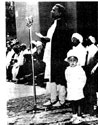
Tedla Bairou show his loyality by intimading , harassing, and arresting those who opposed the unconstitional action during the term he was in power. Despite of his loyality,in July 1955, the emperor ordered Tedla Bairu, the Eritrean Chief Executive, to resign. In August, the emperor replaced him with his own representatives, Asfeha Woldemichael. According to Killon’s explanation (1997:103) Tedla Bairu dictatorial methods led to a revolt in the Assembly in 1955, which forced the resignation of Tedla Bairu. Another version of the reason for his resignation was the growing Ethiopian interference undermining Eritrean autonomy but this was resisted by the Chief Executive which led to the hostile relationship between the Chief Executive and the Representative of the Emperor in Eritrea.(Bereketab, 2000:172)
- Source column 3, spans 5 columns
- Source column 9, spans 6 columns, spans 2 rows
Killon ( 1997:103), (Pateman 1990:68) also add that Tedla Bairu had expressed his disquiet over Ethiopia’s policy of depriving Eritreans of the human rights promised them in the Constitution.
- Source column 1, spans 8 columns
- Source column 1, spans 14 columns
Consequently the Ethiopian government realised that Ato Tedla Bairu was sympathetic towards the federalist government of Ethiopia’s illegal action, and he was forced to resign in 1955, and in the end he defected to the ELF in 1967. Africa Watch (1991:40) and Pateman (1990)
- Source column 1, spans 19 columns
In July 1955, the emperor ordered Tedla Bairu, the Eritrean Chief Executive, and Ali Musa Radai, President of the Eritrean Assembly, to resign. In August, he replaced them with his own representatives, Asfeha Woldemichael and Idris Mohammed Adem.
In 1956, a major student demonstration protesting all forms of human rights violations was brutally suppressed
In 1957, the Ethiopian government established Amharic as the official language of Eritrea in place of Tigringa and Arabic that had been stipulated as official languages under the Eritrean constitution. Following this most books written in Tigringa and Arabic were burnt. In 1957 the Ethiopian government also banned trade unions, closed many Eritrean industries, dismantled Eritrean factories and moved them to the capital city of Ethiopia, Addis Ababa25. As a result, the number of workers in Eritrea declined from 32,400 (27,000 Eritreans; 5,400 Italians) to 10, 350(10,000 Eritrean; 350 Italian).
In 1958 the Eritrean flag was lowered and only the Ethiopian flag was permitted. In response a general strike and demonstration were called. The demonstration in Asmara, led by the banned trade unions, resulted in the police opening fire on the demonstrators killing 88 civilians and wounding 440 others , and many thousands were jailed. Furthermore 18 prominent citizens including Omar Kadi were arrested for sending a telegraph to the Secretary-General protesting against Ethiopian violations of UN Resolution 390(AV). As a result of this strike and resistance by the members of the Eritrean parliament such as Omar Kadi and others to the Ethiopian government's violations of UN Resolution 390(AV) , political rights and civil liberties came to an end in 1958. This was when the Union of Eritrea Labour Syndicates was banned and its newspaper " The voice of Eritrea" were prohibited by the Ethiopian Emperor; Newspapers were closed down and freedom of speech and assembly were drastically curtailed. Political parties with the exception of the Unionist Party ceased. Following this, Ethiopian law was imposed and all forms of human rights were violated which to the birth of the Eritrean Liberation Movement (Harakat) in the late 1950s
In 1959 the Ethiopian government imposed Ethiopian law on Eritrea, and the name Eritrean Government was changed to "Eritrean Administration".
In 1960, the Ethiopian Ministry of Education took full control of Eritrean schools
Between 1958 and 1962, the Ethiopian government never stopped violating the UN Resolution which had been ratified by the Empire on September 11, 1952. Ethiopia's policy to devitalize Eritrea's economy in order to break up the trade unions also led mass immigration. During those period there was a high migration of Eritreans to Ethiopia seen from the graph ;also 30, 000 other workers migrated to Saudi Arabia, and 20,000 workers to Sudan.( Mengestab, 2005:38). Finally , an underground political movement led by the ELM began in 1958
The federal government was dissolved in 1962 by the Ethiopian government in violation of UN 390(AV) Resolution. In this process, the Ethiopian Emperor Haile Sellassie used armed force to intimidate members of parliament and illegally abolished the federation, declaring Eritrea as another province of the Empire. Unfortunately, there was no reaction at all from the UN and the international communities, despite the statement of Dr. Mantienzo the chairman of the UN Commission on Eritrea in 1950
“…The UN Resolution on Eritrea would remain an international instrument and, if violated, the General Assembly could take action on the matter….” 23
The use of armed forces continued for the purposes of suppression and the massacre of the Eritrean people between 1962 and 1991 (Kidane 1996). This new turn in the Eritrean situation, coupled with the decline of the economy, led to the migration of Eritrean labour to Ethiopia and a Diaspora of 750,000 Eritreans went to Sudan and the Middle East.
1960s
1965 at Merara, Hamassien province, and at Medeka, Keren province 67 men and 46 men respectively were killed by the Ethiopian soldiers . On 11 of February 1967 many villages were burnt down in Barka district by the Second Ethiopian Army division. On 12 February 1967, 21 detainees most of them teachers and government employees, were summarily executed in Tessenai • Between February and April in 1967, the Ethiopian soldiers burned 62 villages, including Mogoraib, Zamla, Ad Ibrahim, Gerset Gurgur, Adi Bera, Asir, Fori and Ad Habab. Furthermore, 402 civilians were killed, and about 60, 000 cattle and camels slaughtered with machine guns and knives and by burning them alive. This was reported from local community leaders • On 11 July in 1967 the villages of Eilet and Gumhot were burned, and 30 young men tied up and burned alive inside a house. Five other villages were burned over the following days, 51 people killed. 6, 000 domestic animals were killed. According to reports the soldiers singled out camels for slaughter, because they were vital for transport. Wolde Giorgis (1987:82) also cited that soldiers slaughtering cattle, eating what they wanted, and then leaving the rest to rot. He adds that sometimes soldiers would kill cattle just to get the livers. • In November 1967, almost all the villages of Senhit 174 in all were destroyed by soldiers from the Second Ethiopia Army Division . Some reliable sources reported atrocities included: Kuhul and Amadi: the army ordered the people to collect in one place, where they were bombed by air force planes • Asmat: the army opened fire on a wedding party, killing an unknown number • Mrlefdp: thirty community leaders who met the soldiers and offered them hospitality were killed. • In 1967, over 40 men were slit on the neck in front of their children and wives at Misyam • 86 villages were burned in high land districts of Serays and Akele Guzai and at least 159 people killed.
1970s
• 32 civilans were shot dead when the army burned Arafali village. 88 people were executed when the people of Atshoma refused army order to relocated in a protected village this was in March of 1970. • In November, 112 people were killed in a mosque at Basadare. The people were collected in the mosque by soldiers who said they would be safe there from a planned air strike; the soldiers then opened fire. • On 1st December 1970 625 people were killed in the village of Ona.. • On 27 January 1971 about 60 civilians, most of them elderly people, were killed by soldiers in a mosque in the village of Elabored • On10th of July 1974 over 170 civilians were massacred in Om Hager. • On January 31, 1975, when the Eritrean fronts launched an attack on Asmara city. Over the following four days, government soldiers went on the rampage through the city. Civilians were dragged from their houses and executed. According to the Human Right Watch up to 3,000 people were killed in the city • In March, 1975, 100 patients in Asmara hospital were killed, their bodies being taken out in trucks to be buried. • On 9 March 1975 over 200 civilians in Agordat were killed by the Ethiopian soldiers • On 13 March 1975 the Ethiopian soldiers rounded up the villagers of Woki on a piece of waste ground and shot 37 dead • On 14 March, 1975 many women, children and old men were bayoneted and pregnant women were slit open / The Ethiopians then killed all the livestock and set fire to the house • On 17 April 1975, 235 civilians in Hirgigo were killed by the Ethiopian army • In summer 1975, 110 people in the village of Wokiduba were herded into an orthodox church and massacred. • In 1975-1976 many youth were killed by steel wires and knifing down in the streets of the capital of Asmara Source (Dines 1988; Human Rights Watch 1991)
- Source column 1, spans 19 columns
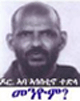
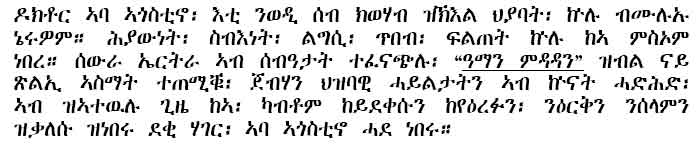
Dr Agostino Tedela was one of the victim of Dergue in 1975
- Source column 2, spans 2 columns
- Source column 4, spans 15 columns, spans 2 rows
- Source column 1, spans 3 columns
- Source column 1, spans 14 columns
Wolde Giorgis (1985:51) who was a chief representative of COPWE(Commission to Organize the Party of the Workers of Ethiopia) in 1979, described 1975 atrocities against the Eritrean people by the Ethiopian government as follows: Young men and women were dragged out of their homes at night, strangled and thrown into the streets in what the death squads themselves called the “ Piano Wire Operation” Hundreds were killed in this terrible manner. One of those victms of 1975 was Dr. Petros Habtemikael an economist who was killed by the Ethiopian security force in 1975
- Source column 1, spans 3 columns, spans 2 rows

- Source column 4, spans 16 columns
During the period of the Dergue (1974-91) there were a number of egregious abuses against academic freedom at Asmara University. An early incident was the killing of Dr. Petros Habtemikael, an economist, in 1975. Dr. Petros taught extension courses in the evening, and some of his students were Ethiopian military officers, who objected to his use of Eritrean rather than Ethiopian examples in his coursework, and to the low grades they were given. It is believed that the officers caused Dr. Petros to be detained and executed
- Source column 4, spans 15 columns

- Source column 5, spans 6 columns
MARYAM GHIMBI
- Source column 4, spans 8 columns
- Source column 4, spans 8 columns
Maryam Ghimbi Asmara’s most notorious political prison, used by the Derg from 1978-1991for the torture and excution of Eritrean civilians accused of collaborating with liberation fronts. source Dabasu 1999:17
- Source column 1, spans 14 columns
•In October,1977 Unknown number of inhabitants were killed at the village of Adihausha. In the same month, again unknown number of inhabitants were killed at the village of Merhan
•According to Wolde Georgis (1985:100), between 1975 and 1978 terrible crimes were committed by the security forces against civilians. He adds that every junior army officer or security official had license to drag people out of their beds or offices, demand money or other favours, and either execute them or put them in jail. By the end of 1978, thousands of prisoners had been executed. For example on 27 of April 1978 there was a report that 27 members of the EPLF led Association of Eritrean Students were executed. (EPLF, 1982:211)
- Source column 1, spans 16 columns
1980s
• Fifteen Eritrean prisoners were executed on 10 January 1986 after they had been held for several years.(Dines, 1988:151) • The massacre of 39 Nara youth at Mogoraib on 19 October 1985. • In May 1988 400 people, mostly women and children, were crushed to death by tanks in the village of She'eb. • Atrocities were also reported between April and May in several parts of the provinces of Hamasien, Senhit, Akele Guzai and Serai.
- Source column 1, spans 15 columns
1990s Following the eruption of the border conflict between Ethiopia and Eritrea in May 1998, the government of Ethiopia launched a wave of deportations of Eritreans and Ethiopians of Eritrean origin, claiming they were a threat to national security. 70,000 of the Eritrean residents in Ethiopia have been deported. Among these people were the elderly, disabled, young children, professionals, businessmen and women
According to the Human Right Group in Asmara, more ethnic Eritreans are being held in small police stations where there is virtually no monitoring of their situation by international observers.
The youth in particular are most vulnerable to detention. Currently there are more than thousands of Eritrean youth in the concentration camps of the TPLF, and some 1,500 Eritreans have been transferred from the former southern detention camp of Blatte to an unspecified location and 1,000 citizens are missing( Kidane, 1999)
The following briefs add other incidents, which happened to Eritreans as the cruel deportation policy of the Ethiopian government was carried out.
· Mothers were grabbed from their children during the apprehension.
A mother whose six-month old baby was snatched off and abandoned arrived delirious and agonized from swollen breasts.
Another woman who left four children behind without anyone to look after them suffered a mental breakdown and was taken to a mental hospital.
A, recently widowed, twenty-three old mother who had just lost her sister and was taking care of her mother but was taken away from her seven-month old baby screaming and begging.
Many reported they could not bid farewell to their children who were in schools when they were taken away.
Almost all mothers were callously denied carrying even the breast-fed infants whom they were forced to abandon crying and without any one to look after.
Another locked the door of her house, leaving her small son sleeping inside because the security officers said she would be back in a few minutes.
Others have begged the soldiers to be allowed to take their children, but have been herded onto buses without even having a chance to say good-bye.
Owners of garages, hotels, shops & other unlisted establishments were forced to leave their businesses prone to pillage and theft.
One elderly gentleman, 74 years old, had been also taken immediately after an operation and put on a bus.
(Source: Geneva, August 4, 1998)
- Source column 7, spans 7 columns
- Source column 6, spans 8 columns
EHREA Eritrean Human Rights Electronic Archive © 2006 Contact: rkidane@talk21.com
HTML English
Chronological evidence of atrocities committed against civilians by the Ethiopian government from
Descriptive archival label; editorial title review pending.
Original source ↗http://www.ehrea.org/ethicrime.htm
Read in the document library →
Shared passages in the archive
These passages also occur in other preserved documents. Each link keeps its own source, language and context.
Read passage and 2 other preserved contexts
Chronological evidence of atrocities committed against civilians by the Ethiopian government from 1950s to 1990s- atrocities committed against civilians by the Ethiopian government
Passage provenance
Record ID:
38fe2ef845d1598c51f7428bOriginal source: http://www.ehrea.org/ethicrime.php
Original SHA-256:
4fd0508a09c489f54064e573f6d8320e2c3b0fa6ee16746eaa20a73a9460a8fe - Commemorating a martyrs’ day
Passage provenance
Record ID:
a36164cd97fc09e3e1c711b5Original source: http://www.ehrea.org/commerT.htm
Original SHA-256:
f5fb7158a588f89258d1b34dd3929626aacf2b6e826256aff238a33eba5961ff
Read passage and 1 other preserved context
Brief background information to the resistance to the Ethiopian government and its crimes in 1950s.- atrocities committed against civilians by the Ethiopian government
Passage provenance
Record ID:
38fe2ef845d1598c51f7428bOriginal source: http://www.ehrea.org/ethicrime.php
Original SHA-256:
4fd0508a09c489f54064e573f6d8320e2c3b0fa6ee16746eaa20a73a9460a8fe
Read passage and 1 other preserved context
The Ethiopian government's crimes against innocent civilians and nationalists have a history going back to the late 1940s. In 1949 Abdulkader Kebira was assassinated by Andenete terrorist's operating under Ethiopian control during 1947-1950.- atrocities committed against civilians by the Ethiopian government
Passage provenance
Record ID:
38fe2ef845d1598c51f7428bOriginal source: http://www.ehrea.org/ethicrime.php
Original SHA-256:
4fd0508a09c489f54064e573f6d8320e2c3b0fa6ee16746eaa20a73a9460a8fe
Read passage and 1 other preserved context
In the 1950s when Eritrea had a Federal Constitution, it contained a list of fundamental human rights prescribed by UN resolution. The question of respect for human rights and freedom of others under this Constitution of December 1950 was highlighted by Clarence (1955). Despite this fact, the Ethiopian government began to interefre into the Eritrean judical system after two weeks the government of Eritrea was formed. Regarding this Fessehatzion (1998:36) stated that Proclamation 130 issued in Addis Ababa by an Imperial decree, this Proclamation was designed to undermines the independence of the judicial system in Eritrea. Artcle 4 of the Proclamation stated that cases decided by the Eritrean Supreme Court could be appealed to the Federal High Court, although the Federal Acts and the Eritrean constitution had explicitly stated that inEritrea the Eritreans Supreme Court was the court of last resort. Furthermore, Proclamation 130 stated that the Ethiopian Court had the right to pass judgement on laws and other decisions passed by the Eritrean Assembly.Fessehatzion (1998: 39)added that the press, particularly the Voice of Eritrea, was unrelenting in its attack on the Proclamation as an intrusion in Eritrea's autonomy. Omar Kadi, who saw a serious problem in Ethiopia's unilaterial decisions. He warned that what Ethiopia was doing on the eve of the establishement of the Eritrean government was a harbinger of an uncertain future.- atrocities committed against civilians by the Ethiopian government
Passage provenance
Record ID:
38fe2ef845d1598c51f7428bOriginal source: http://www.ehrea.org/ethicrime.php
Original SHA-256:
4fd0508a09c489f54064e573f6d8320e2c3b0fa6ee16746eaa20a73a9460a8fe
Read passage and 1 other preserved context
On September 30, 1952, Proclamation number 130 was issued by Emperor, declaring the federal Ethiopian court to be the territory's final court of appeal. This was in violation of Articles 85 and 90 of the Eritrean Constitution. Towards the end of 1952, La voce dell’ Eritrea, a newspaper critical of federation, was closed down. In 1953 the newly founded Eritrean General Union of Labor Syndicates, which had 4, 000 paid members and 6,000 more associate members, was banned. In 1953, the Empire tightened its control by passing a law that required all males in urban areas to carry idenity card at all time The British Police Commissioner of Eritrea, Colonel Cracknell, reported that by 1953 “the more fanatic of the young Unionists, formerly of a ‘union or die’ attitude, have now changed their cry to’Federation or die( Bereketeab 2000:176). Omar Kadi, jurist , former President of the IML, and editor of the pro-unionist newspaper Andinet'nMe'belnaan/Unione e Progresso(Union and Progress) was one of the few members of the Eritrean Assembly to lodge a letter of protest to the President of the Assembly, on May 25, 1953. In this letter he pointed out that the legal maneuvers of the federal government were unconstitutional and eroded Eritrea's autonomy (Iyob 1995:.89] Another assassination attempt on the life of Ato Wolde-Ab Wolde-Mariam was made in 1953. The families of Ras Tessema Asberom were harassed-notably Abraha Tessema, who was incarcerated on a frameup charge of conspiring to assassinate Ato Tedla Bairu.(Gebre-Medhin 1989:160) Abusing the powers of his office, Ato Tedla Bairu moved against his political opponenent. Dej. Abraha Tessema..was arrested and Ato Wolde-Ab Woldemariam was so harassed that he fled to Cairo...and later(was) joined by Ibrahim Sultan- atrocities committed against civilians by the Ethiopian government
Passage provenance
Record ID:
38fe2ef845d1598c51f7428bOriginal source: http://www.ehrea.org/ethicrime.php
Original SHA-256:
4fd0508a09c489f54064e573f6d8320e2c3b0fa6ee16746eaa20a73a9460a8fe
Read passage and 1 other preserved context
On September 30, 1952, Proclamation number 130 was issued by Emperor, declaring the federal Ethiopian court to be the territory's final court of appeal. This was in violation of Articles 85 and 90 of the Eritrean Constitution.- atrocities committed against civilians by the Ethiopian government
Passage provenance
Record ID:
38fe2ef845d1598c51f7428bOriginal source: http://www.ehrea.org/ethicrime.php
Original SHA-256:
4fd0508a09c489f54064e573f6d8320e2c3b0fa6ee16746eaa20a73a9460a8fe
Read passage and 1 other preserved context
Towards the end of 1952, La voce dell’ Eritrea, a newspaper critical of federation, was closed down.- atrocities committed against civilians by the Ethiopian government
Passage provenance
Record ID:
38fe2ef845d1598c51f7428bOriginal source: http://www.ehrea.org/ethicrime.php
Original SHA-256:
4fd0508a09c489f54064e573f6d8320e2c3b0fa6ee16746eaa20a73a9460a8fe
Read passage and 1 other preserved context
In 1953 the newly founded Eritrean General Union of Labor Syndicates, which had 4, 000 paid members and 6,000 more associate members, was banned.- atrocities committed against civilians by the Ethiopian government
Passage provenance
Record ID:
38fe2ef845d1598c51f7428bOriginal source: http://www.ehrea.org/ethicrime.php
Original SHA-256:
4fd0508a09c489f54064e573f6d8320e2c3b0fa6ee16746eaa20a73a9460a8fe
Read passage and 1 other preserved context
In 1953, the Empire tightened its control by passing a law that required all males in urban areas to carry idenity card at all time- atrocities committed against civilians by the Ethiopian government
Passage provenance
Record ID:
38fe2ef845d1598c51f7428bOriginal source: http://www.ehrea.org/ethicrime.php
Original SHA-256:
4fd0508a09c489f54064e573f6d8320e2c3b0fa6ee16746eaa20a73a9460a8fe
Read passage and 1 other preserved context
The British Police Commissioner of Eritrea, Colonel Cracknell, reported that by 1953 “the more fanatic of the young Unionists, formerly of a ‘union or die’ attitude, have now changed their cry to’Federation or die( Bereketeab 2000:176). Omar Kadi, jurist , former President of the IML, and editor of the pro-unionist newspaper Andinet'nMe'belnaan/Unione e Progresso(Union and Progress) was one of the few members of the Eritrean Assembly to lodge a letter of protest to the President of the Assembly, on May 25, 1953. In this letter he pointed out that the legal maneuvers of the federal government were unconstitutional and eroded Eritrea's autonomy (Iyob 1995:.89]- atrocities committed against civilians by the Ethiopian government
Passage provenance
Record ID:
38fe2ef845d1598c51f7428bOriginal source: http://www.ehrea.org/ethicrime.php
Original SHA-256:
4fd0508a09c489f54064e573f6d8320e2c3b0fa6ee16746eaa20a73a9460a8fe
Read passage and 1 other preserved context
Another assassination attempt on the life of Ato Wolde-Ab Wolde-Mariam was made in 1953. The families of Ras Tessema Asberom were harassed-notably Abraha Tessema, who was incarcerated on a frameup charge of conspiring to assassinate Ato Tedla Bairu.(Gebre-Medhin 1989:160)- atrocities committed against civilians by the Ethiopian government
Passage provenance
Record ID:
38fe2ef845d1598c51f7428bOriginal source: http://www.ehrea.org/ethicrime.php
Original SHA-256:
4fd0508a09c489f54064e573f6d8320e2c3b0fa6ee16746eaa20a73a9460a8fe
Read passage and 1 other preserved context
Abusing the powers of his office, Ato Tedla Bairu moved against his political opponenent. Dej. Abraha Tessema..was arrested and Ato Wolde-Ab Woldemariam was so harassed that he fled to Cairo...and later(was) joined by Ibrahim Sultan- atrocities committed against civilians by the Ethiopian government
Passage provenance
Record ID:
38fe2ef845d1598c51f7428bOriginal source: http://www.ehrea.org/ethicrime.php
Original SHA-256:
4fd0508a09c489f54064e573f6d8320e2c3b0fa6ee16746eaa20a73a9460a8fe
Read passage and 1 other preserved context
...I also have in me the courage to die for my political beliefs, for the cause of liberty of my country, and for the genuine interest of my brothers and sisters." Woldeab Woldemariam in Hanti, Eritrea, Issue#, August 22, 1951- atrocities committed against civilians by the Ethiopian government
Passage provenance
Record ID:
38fe2ef845d1598c51f7428bOriginal source: http://www.ehrea.org/ethicrime.php
Original SHA-256:
4fd0508a09c489f54064e573f6d8320e2c3b0fa6ee16746eaa20a73a9460a8fe
Read passage and 3 other preserved contexts
A man is arrested in the street without law or ordinance and is imprisoned without justice and leaves prison without justice. As proof it is possible to cite the injustice against Dejatch Abraha Tessemma and his family, of which you will have heard".(see letter's 1954)- atrocities committed against civilians by the Ethiopian government
Passage provenance
Record ID:
38fe2ef845d1598c51f7428bOriginal source: http://www.ehrea.org/ethicrime.php
Original SHA-256:
4fd0508a09c489f54064e573f6d8320e2c3b0fa6ee16746eaa20a73a9460a8fe - The consequent disunity of political leaders
Passage provenance
Record ID:
a6b032389c3c94ceec73c1a2Original source: http://www.ehrea.org/1952.php
Original SHA-256:
17089f0a864327b8d23be30b67ad55ed4379308b4f4a998bd6cadcbde9cc68ef - The consequent disunity of political leaders
Passage provenance
Record ID:
a6b032389c3c94ceec73c1a2Original source: http://www.ehrea.org/1952.php
Original SHA-256:
17089f0a864327b8d23be30b67ad55ed4379308b4f4a998bd6cadcbde9cc68ef
Read passage and 1 other preserved context
In October 1953, all parties, with the exception of the Unionist Party, made an appeal to the U.N., requesting this body to insure respect of the Federal Resolution. On May 22, 1954 a resolution condemning " Ethiopian interference in Eritrean affairs" was adopted by the Eritrean Parliament, with numerous Unionist deputies voting in favour of the resolution. (Bimbi, 1982:179)- atrocities committed against civilians by the Ethiopian government
Passage provenance
Record ID:
38fe2ef845d1598c51f7428bOriginal source: http://www.ehrea.org/ethicrime.php
Original SHA-256:
4fd0508a09c489f54064e573f6d8320e2c3b0fa6ee16746eaa20a73a9460a8fe
Read passage and 1 other preserved context
Tedla Bairou show his loyality by intimading , harassing, and arresting those who opposed the unconstitional action during the term he was in power. Despite of his loyality,in July 1955, the emperor ordered Tedla Bairu, the Eritrean Chief Executive, to resign. In August, the emperor replaced him with his own representatives, Asfeha Woldemichael. According to Killon’s explanation (1997:103) Tedla Bairu dictatorial methods led to a revolt in the Assembly in 1955, which forced the resignation of Tedla Bairu. Another version of the reason for his resignation was the growing Ethiopian interference undermining Eritrean autonomy but this was resisted by the Chief Executive which led to the hostile relationship between the Chief Executive and the Representative of the Emperor in Eritrea.(Bereketab, 2000:172)- atrocities committed against civilians by the Ethiopian government
Passage provenance
Record ID:
38fe2ef845d1598c51f7428bOriginal source: http://www.ehrea.org/ethicrime.php
Original SHA-256:
4fd0508a09c489f54064e573f6d8320e2c3b0fa6ee16746eaa20a73a9460a8fe
Read passage and 1 other preserved context
Killon ( 1997:103), (Pateman 1990:68) also add that Tedla Bairu had expressed his disquiet over Ethiopia’s policy of depriving Eritreans of the human rights promised them in the Constitution.- atrocities committed against civilians by the Ethiopian government
Passage provenance
Record ID:
38fe2ef845d1598c51f7428bOriginal source: http://www.ehrea.org/ethicrime.php
Original SHA-256:
4fd0508a09c489f54064e573f6d8320e2c3b0fa6ee16746eaa20a73a9460a8fe
Read passage and 1 other preserved context
Consequently the Ethiopian government realised that Ato Tedla Bairu was sympathetic towards the federalist government of Ethiopia’s illegal action, and he was forced to resign in 1955, and in the end he defected to the ELF in 1967. Africa Watch (1991:40) and Pateman (1990)- atrocities committed against civilians by the Ethiopian government
Passage provenance
Record ID:
38fe2ef845d1598c51f7428bOriginal source: http://www.ehrea.org/ethicrime.php
Original SHA-256:
4fd0508a09c489f54064e573f6d8320e2c3b0fa6ee16746eaa20a73a9460a8fe
Read passage and 1 other preserved context
In July 1955, the emperor ordered Tedla Bairu, the Eritrean Chief Executive, and Ali Musa Radai, President of the Eritrean Assembly, to resign. In August, he replaced them with his own representatives, Asfeha Woldemichael and Idris Mohammed Adem. In 1956, a major student demonstration protesting all forms of human rights violations was brutally suppressed In 1957, the Ethiopian government established Amharic as the official language of Eritrea in place of Tigringa and Arabic that had been stipulated as official languages under the Eritrean constitution. Following this most books written in Tigringa and Arabic were burnt. In 1957 the Ethiopian government also banned trade unions, closed many Eritrean industries, dismantled Eritrean factories and moved them to the capital city of Ethiopia, Addis Ababa25. As a result, the number of workers in Eritrea declined from 32,400 (27,000 Eritreans; 5,400 Italians) to 10, 350(10,000 Eritrean; 350 Italian). In 1958 the Eritrean flag was lowered and only the Ethiopian flag was permitted. In response a general strike and demonstration were called. The demonstration in Asmara, led by the banned trade unions, resulted in the police opening fire on the demonstrators killing 88 civilians and wounding 440 others , and many thousands were jailed. Furthermore 18 prominent citizens including Omar Kadi were arrested for sending a telegraph to the Secretary-General protesting against Ethiopian violations of UN Resolution 390(AV). As a result of this strike and resistance by the members of the Eritrean parliament such as Omar Kadi and others to the Ethiopian government's violations of UN Resolution 390(AV) , political rights and civil liberties came to an end in 1958. This was when the Union of Eritrea Labour Syndicates was banned and its newspaper " The voice of Eritrea" were prohibited by the Ethiopian Emperor; Newspapers were closed down and freedom of speech and assembly were drastically curtailed. Political parties with the exception of the Unionist Party ceased. Following this, Ethiopian law was imposed and all forms of human rights were violated which to the birth of the Eritrean Liberation Movement (Harakat) in the late 1950s In 1959 the Ethiopian government imposed Ethiopian law on Eritrea, and the name Eritrean Government was changed to "Eritrean Administration". In 1960, the Ethiopian Ministry of Education took full control of Eritrean schools Between 1958 and 1962, the Ethiopian government never stopped violating the UN Resolution which had been ratified by the Empire on September 11, 1952. Ethiopia's policy to devitalize Eritrea's economy in order to break up the trade unions also led mass immigration. During those period there was a high migration of Eritreans to Ethiopia seen from the graph ;also 30, 000 other workers migrated to Saudi Arabia, and 20,000 workers to Sudan.( Mengestab, 2005:38). Finally , an underground political movement led by the ELM began in 1958 The federal government was dissolved in 1962 by the Ethiopian government in violation of UN 390(AV) Resolution. In this process, the Ethiopian Emperor Haile Sellassie used armed force to intimidate members of parliament and illegally abolished the federation, declaring Eritrea as another province of the Empire. Unfortunately, there was no reaction at all from the UN and the international communities, despite the statement of Dr. Mantienzo the chairman of the UN Commission on Eritrea in 1950 “…The UN Resolution on Eritrea would remain an international instrument and, if violated, the General Assembly could take action on the matter….” 23- atrocities committed against civilians by the Ethiopian government
Passage provenance
Record ID:
38fe2ef845d1598c51f7428bOriginal source: http://www.ehrea.org/ethicrime.php
Original SHA-256:
4fd0508a09c489f54064e573f6d8320e2c3b0fa6ee16746eaa20a73a9460a8fe
Read passage and 1 other preserved context
In July 1955, the emperor ordered Tedla Bairu, the Eritrean Chief Executive, and Ali Musa Radai, President of the Eritrean Assembly, to resign. In August, he replaced them with his own representatives, Asfeha Woldemichael and Idris Mohammed Adem.- atrocities committed against civilians by the Ethiopian government
Passage provenance
Record ID:
38fe2ef845d1598c51f7428bOriginal source: http://www.ehrea.org/ethicrime.php
Original SHA-256:
4fd0508a09c489f54064e573f6d8320e2c3b0fa6ee16746eaa20a73a9460a8fe
Read passage and 1 other preserved context
In 1956, a major student demonstration protesting all forms of human rights violations was brutally suppressed- atrocities committed against civilians by the Ethiopian government
Passage provenance
Record ID:
38fe2ef845d1598c51f7428bOriginal source: http://www.ehrea.org/ethicrime.php
Original SHA-256:
4fd0508a09c489f54064e573f6d8320e2c3b0fa6ee16746eaa20a73a9460a8fe
Read passage and 2 other preserved contexts
In 1957, the Ethiopian government established Amharic as the official language of Eritrea in place of Tigringa and Arabic that had been stipulated as official languages under the Eritrean constitution. Following this most books written in Tigringa and Arabic were burnt. In 1957 the Ethiopian government also banned trade unions, closed many Eritrean industries, dismantled Eritrean factories and moved them to the capital city of Ethiopia, Addis Ababa25. As a result, the number of workers in Eritrea declined from 32,400 (27,000 Eritreans; 5,400 Italians) to 10, 350(10,000 Eritrean; 350 Italian).- atrocities committed against civilians by the Ethiopian government
Passage provenance
Record ID:
38fe2ef845d1598c51f7428bOriginal source: http://www.ehrea.org/ethicrime.php
Original SHA-256:
4fd0508a09c489f54064e573f6d8320e2c3b0fa6ee16746eaa20a73a9460a8fe - Report on Crimes committed against the Eritrean people by the Ethiopian rulers
Passage provenance
Record ID:
4b2f624aac88f6beabcdaaa8Original source: http://www.ehrea.org/otherm5.php
Original SHA-256:
8982010fffabfc7a09a437a74e3944b081de0c456982250ea78e36c13c54d58e
Read passage and 1 other preserved context
In 1958 the Eritrean flag was lowered and only the Ethiopian flag was permitted. In response a general strike and demonstration were called. The demonstration in Asmara, led by the banned trade unions, resulted in the police opening fire on the demonstrators killing 88 civilians and wounding 440 others , and many thousands were jailed. Furthermore 18 prominent citizens including Omar Kadi were arrested for sending a telegraph to the Secretary-General protesting against Ethiopian violations of UN Resolution 390(AV). As a result of this strike and resistance by the members of the Eritrean parliament such as Omar Kadi and others to the Ethiopian government's violations of UN Resolution 390(AV) , political rights and civil liberties came to an end in 1958. This was when the Union of Eritrea Labour Syndicates was banned and its newspaper " The voice of Eritrea" were prohibited by the Ethiopian Emperor; Newspapers were closed down and freedom of speech and assembly were drastically curtailed. Political parties with the exception of the Unionist Party ceased. Following this, Ethiopian law was imposed and all forms of human rights were violated which to the birth of the Eritrean Liberation Movement (Harakat) in the late 1950s- atrocities committed against civilians by the Ethiopian government
Passage provenance
Record ID:
38fe2ef845d1598c51f7428bOriginal source: http://www.ehrea.org/ethicrime.php
Original SHA-256:
4fd0508a09c489f54064e573f6d8320e2c3b0fa6ee16746eaa20a73a9460a8fe
Read passage and 1 other preserved context
In 1959 the Ethiopian government imposed Ethiopian law on Eritrea, and the name Eritrean Government was changed to "Eritrean Administration".- atrocities committed against civilians by the Ethiopian government
Passage provenance
Record ID:
38fe2ef845d1598c51f7428bOriginal source: http://www.ehrea.org/ethicrime.php
Original SHA-256:
4fd0508a09c489f54064e573f6d8320e2c3b0fa6ee16746eaa20a73a9460a8fe
Read passage and 1 other preserved context
In 1960, the Ethiopian Ministry of Education took full control of Eritrean schools- atrocities committed against civilians by the Ethiopian government
Passage provenance
Record ID:
38fe2ef845d1598c51f7428bOriginal source: http://www.ehrea.org/ethicrime.php
Original SHA-256:
4fd0508a09c489f54064e573f6d8320e2c3b0fa6ee16746eaa20a73a9460a8fe
Read passage and 1 other preserved context
Between 1958 and 1962, the Ethiopian government never stopped violating the UN Resolution which had been ratified by the Empire on September 11, 1952. Ethiopia's policy to devitalize Eritrea's economy in order to break up the trade unions also led mass immigration. During those period there was a high migration of Eritreans to Ethiopia seen from the graph ;also 30, 000 other workers migrated to Saudi Arabia, and 20,000 workers to Sudan.( Mengestab, 2005:38). Finally , an underground political movement led by the ELM began in 1958- atrocities committed against civilians by the Ethiopian government
Passage provenance
Record ID:
38fe2ef845d1598c51f7428bOriginal source: http://www.ehrea.org/ethicrime.php
Original SHA-256:
4fd0508a09c489f54064e573f6d8320e2c3b0fa6ee16746eaa20a73a9460a8fe
Read passage and 1 other preserved context
The federal government was dissolved in 1962 by the Ethiopian government in violation of UN 390(AV) Resolution. In this process, the Ethiopian Emperor Haile Sellassie used armed force to intimidate members of parliament and illegally abolished the federation, declaring Eritrea as another province of the Empire. Unfortunately, there was no reaction at all from the UN and the international communities, despite the statement of Dr. Mantienzo the chairman of the UN Commission on Eritrea in 1950- atrocities committed against civilians by the Ethiopian government
Passage provenance
Record ID:
38fe2ef845d1598c51f7428bOriginal source: http://www.ehrea.org/ethicrime.php
Original SHA-256:
4fd0508a09c489f54064e573f6d8320e2c3b0fa6ee16746eaa20a73a9460a8fe
Read passage and 3 other preserved contexts
“…The UN Resolution on Eritrea would remain an international instrument and, if violated, the General Assembly could take action on the matter….” 23- Introduction
Passage provenance
Record ID:
0e24ad6558c927736c5f783dOriginal source: http://www.ehrea.org/DEPORt.htm
Original SHA-256:
f0e5371a3e71b3ebc516c774d5037896a3fa535eb287b4e0975e0255a6793f39 - atrocities committed against civilians by the Ethiopian government
Passage provenance
Record ID:
38fe2ef845d1598c51f7428bOriginal source: http://www.ehrea.org/ethicrime.php
Original SHA-256:
4fd0508a09c489f54064e573f6d8320e2c3b0fa6ee16746eaa20a73a9460a8fe - Introduction
Passage provenance
Record ID:
d367db26fbeae1e14511a04cOriginal source: http://www.ehrea.org/DEPORt.htm
Original SHA-256:
42853b4706df4cb8efa94fc15f4dd88eed3c13537c2b3fae44fbda6945c716de
Read passage and 1 other preserved context
The use of armed forces continued for the purposes of suppression and the massacre of the Eritrean people between 1962 and 1991 (Kidane 1996). This new turn in the Eritrean situation, coupled with the decline of the economy, led to the migration of Eritrean labour to Ethiopia and a Diaspora of 750,000 Eritreans went to Sudan and the Middle East.- atrocities committed against civilians by the Ethiopian government
Passage provenance
Record ID:
38fe2ef845d1598c51f7428bOriginal source: http://www.ehrea.org/ethicrime.php
Original SHA-256:
4fd0508a09c489f54064e573f6d8320e2c3b0fa6ee16746eaa20a73a9460a8fe
Read passage and 1 other preserved context
1965 at Merara, Hamassien province, and at Medeka, Keren province 67 men and 46 men respectively were killed by the Ethiopian soldiers . On 11 of February 1967 many villages were burnt down in Barka district by the Second Ethiopian Army division. On 12 February 1967, 21 detainees most of them teachers and government employees, were summarily executed in Tessenai • Between February and April in 1967, the Ethiopian soldiers burned 62 villages, including Mogoraib, Zamla, Ad Ibrahim, Gerset Gurgur, Adi Bera, Asir, Fori and Ad Habab. Furthermore, 402 civilians were killed, and about 60, 000 cattle and camels slaughtered with machine guns and knives and by burning them alive. This was reported from local community leaders • On 11 July in 1967 the villages of Eilet and Gumhot were burned, and 30 young men tied up and burned alive inside a house. Five other villages were burned over the following days, 51 people killed. 6, 000 domestic animals were killed. According to reports the soldiers singled out camels for slaughter, because they were vital for transport. Wolde Giorgis (1987:82) also cited that soldiers slaughtering cattle, eating what they wanted, and then leaving the rest to rot. He adds that sometimes soldiers would kill cattle just to get the livers. • In November 1967, almost all the villages of Senhit 174 in all were destroyed by soldiers from the Second Ethiopia Army Division . Some reliable sources reported atrocities included: Kuhul and Amadi: the army ordered the people to collect in one place, where they were bombed by air force planes • Asmat: the army opened fire on a wedding party, killing an unknown number • Mrlefdp: thirty community leaders who met the soldiers and offered them hospitality were killed. • In 1967, over 40 men were slit on the neck in front of their children and wives at Misyam • 86 villages were burned in high land districts of Serays and Akele Guzai and at least 159 people killed.- atrocities committed against civilians by the Ethiopian government
Passage provenance
Record ID:
38fe2ef845d1598c51f7428bOriginal source: http://www.ehrea.org/ethicrime.php
Original SHA-256:
4fd0508a09c489f54064e573f6d8320e2c3b0fa6ee16746eaa20a73a9460a8fe
Read passage and 1 other preserved context
• 32 civilans were shot dead when the army burned Arafali village. 88 people were executed when the people of Atshoma refused army order to relocated in a protected village this was in March of 1970. • In November, 112 people were killed in a mosque at Basadare. The people were collected in the mosque by soldiers who said they would be safe there from a planned air strike; the soldiers then opened fire. • On 1st December 1970 625 people were killed in the village of Ona.. • On 27 January 1971 about 60 civilians, most of them elderly people, were killed by soldiers in a mosque in the village of Elabored • On10th of July 1974 over 170 civilians were massacred in Om Hager. • On January 31, 1975, when the Eritrean fronts launched an attack on Asmara city. Over the following four days, government soldiers went on the rampage through the city. Civilians were dragged from their houses and executed. According to the Human Right Watch up to 3,000 people were killed in the city • In March, 1975, 100 patients in Asmara hospital were killed, their bodies being taken out in trucks to be buried. • On 9 March 1975 over 200 civilians in Agordat were killed by the Ethiopian soldiers • On 13 March 1975 the Ethiopian soldiers rounded up the villagers of Woki on a piece of waste ground and shot 37 dead • On 14 March, 1975 many women, children and old men were bayoneted and pregnant women were slit open / The Ethiopians then killed all the livestock and set fire to the house • On 17 April 1975, 235 civilians in Hirgigo were killed by the Ethiopian army • In summer 1975, 110 people in the village of Wokiduba were herded into an orthodox church and massacred. • In 1975-1976 many youth were killed by steel wires and knifing down in the streets of the capital of Asmara Source (Dines 1988; Human Rights Watch 1991)- atrocities committed against civilians by the Ethiopian government
Passage provenance
Record ID:
38fe2ef845d1598c51f7428bOriginal source: http://www.ehrea.org/ethicrime.php
Original SHA-256:
4fd0508a09c489f54064e573f6d8320e2c3b0fa6ee16746eaa20a73a9460a8fe
Read passage and 1 other preserved context
Wolde Giorgis (1985:51) who was a chief representative of COPWE(Commission to Organize the Party of the Workers of Ethiopia) in 1979, described 1975 atrocities against the Eritrean people by the Ethiopian government as follows: Young men and women were dragged out of their homes at night, strangled and thrown into the streets in what the death squads themselves called the “ Piano Wire Operation” Hundreds were killed in this terrible manner. One of those victms of 1975 was Dr. Petros Habtemikael an economist who was killed by the Ethiopian security force in 1975- atrocities committed against civilians by the Ethiopian government
Passage provenance
Record ID:
38fe2ef845d1598c51f7428bOriginal source: http://www.ehrea.org/ethicrime.php
Original SHA-256:
4fd0508a09c489f54064e573f6d8320e2c3b0fa6ee16746eaa20a73a9460a8fe
Read passage and 1 other preserved context
During the period of the Dergue (1974-91) there were a number of egregious abuses against academic freedom at Asmara University. An early incident was the killing of Dr. Petros Habtemikael, an economist, in 1975. Dr. Petros taught extension courses in the evening, and some of his students were Ethiopian military officers, who objected to his use of Eritrean rather than Ethiopian examples in his coursework, and to the low grades they were given. It is believed that the officers caused Dr. Petros to be detained and executed- atrocities committed against civilians by the Ethiopian government
Passage provenance
Record ID:
38fe2ef845d1598c51f7428bOriginal source: http://www.ehrea.org/ethicrime.php
Original SHA-256:
4fd0508a09c489f54064e573f6d8320e2c3b0fa6ee16746eaa20a73a9460a8fe
Read passage and 1 other preserved context
Maryam Ghimbi Asmara’s most notorious political prison, used by the Derg from 1978-1991for the torture and excution of Eritrean civilians accused of collaborating with liberation fronts. source Dabasu 1999:17- atrocities committed against civilians by the Ethiopian government
Passage provenance
Record ID:
38fe2ef845d1598c51f7428bOriginal source: http://www.ehrea.org/ethicrime.php
Original SHA-256:
4fd0508a09c489f54064e573f6d8320e2c3b0fa6ee16746eaa20a73a9460a8fe
Read passage and 1 other preserved context
•In October,1977 Unknown number of inhabitants were killed at the village of Adihausha. In the same month, again unknown number of inhabitants were killed at the village of Merhan- atrocities committed against civilians by the Ethiopian government
Passage provenance
Record ID:
38fe2ef845d1598c51f7428bOriginal source: http://www.ehrea.org/ethicrime.php
Original SHA-256:
4fd0508a09c489f54064e573f6d8320e2c3b0fa6ee16746eaa20a73a9460a8fe
Read passage and 1 other preserved context
•According to Wolde Georgis (1985:100), between 1975 and 1978 terrible crimes were committed by the security forces against civilians. He adds that every junior army officer or security official had license to drag people out of their beds or offices, demand money or other favours, and either execute them or put them in jail. By the end of 1978, thousands of prisoners had been executed. For example on 27 of April 1978 there was a report that 27 members of the EPLF led Association of Eritrean Students were executed. (EPLF, 1982:211)- atrocities committed against civilians by the Ethiopian government
Passage provenance
Record ID:
38fe2ef845d1598c51f7428bOriginal source: http://www.ehrea.org/ethicrime.php
Original SHA-256:
4fd0508a09c489f54064e573f6d8320e2c3b0fa6ee16746eaa20a73a9460a8fe
Read passage and 2 other preserved contexts
• Fifteen Eritrean prisoners were executed on 10 January 1986 after they had been held for several years.(Dines, 1988:151) • The massacre of 39 Nara youth at Mogoraib on 19 October 1985. • In May 1988 400 people, mostly women and children, were crushed to death by tanks in the village of She'eb. • Atrocities were also reported between April and May in several parts of the provinces of Hamasien, Senhit, Akele Guzai and Serai.- Archived reference: “The consequent of rivalry and disunity of political leaders”
Passage provenance
Record ID:
067f8a49cf22ccef9a4030fcOriginal source: http://www.ehrea.org/2010.php
Original SHA-256:
17c628ac16e51a8f7dd849ce58d9d862aa91633e5dc025ccde637ffadb3bcc0a - atrocities committed against civilians by the Ethiopian government
Passage provenance
Record ID:
38fe2ef845d1598c51f7428bOriginal source: http://www.ehrea.org/ethicrime.php
Original SHA-256:
4fd0508a09c489f54064e573f6d8320e2c3b0fa6ee16746eaa20a73a9460a8fe
Read passage and 1 other preserved context
1990s Following the eruption of the border conflict between Ethiopia and Eritrea in May 1998, the government of Ethiopia launched a wave of deportations of Eritreans and Ethiopians of Eritrean origin, claiming they were a threat to national security. 70,000 of the Eritrean residents in Ethiopia have been deported. Among these people were the elderly, disabled, young children, professionals, businessmen and women- atrocities committed against civilians by the Ethiopian government
Passage provenance
Record ID:
38fe2ef845d1598c51f7428bOriginal source: http://www.ehrea.org/ethicrime.php
Original SHA-256:
4fd0508a09c489f54064e573f6d8320e2c3b0fa6ee16746eaa20a73a9460a8fe
Read passage and 1 other preserved context
According to the Human Right Group in Asmara, more ethnic Eritreans are being held in small police stations where there is virtually no monitoring of their situation by international observers.- atrocities committed against civilians by the Ethiopian government
Passage provenance
Record ID:
38fe2ef845d1598c51f7428bOriginal source: http://www.ehrea.org/ethicrime.php
Original SHA-256:
4fd0508a09c489f54064e573f6d8320e2c3b0fa6ee16746eaa20a73a9460a8fe
Read passage and 1 other preserved context
The youth in particular are most vulnerable to detention. Currently there are more than thousands of Eritrean youth in the concentration camps of the TPLF, and some 1,500 Eritreans have been transferred from the former southern detention camp of Blatte to an unspecified location and 1,000 citizens are missing( Kidane, 1999)- atrocities committed against civilians by the Ethiopian government
Passage provenance
Record ID:
38fe2ef845d1598c51f7428bOriginal source: http://www.ehrea.org/ethicrime.php
Original SHA-256:
4fd0508a09c489f54064e573f6d8320e2c3b0fa6ee16746eaa20a73a9460a8fe
Read passage and 3 other preserved contexts
The following briefs add other incidents, which happened to Eritreans as the cruel deportation policy of the Ethiopian government was carried out.- Introduction
Passage provenance
Record ID:
0e24ad6558c927736c5f783dOriginal source: http://www.ehrea.org/DEPORt.htm
Original SHA-256:
f0e5371a3e71b3ebc516c774d5037896a3fa535eb287b4e0975e0255a6793f39 - atrocities committed against civilians by the Ethiopian government
Passage provenance
Record ID:
38fe2ef845d1598c51f7428bOriginal source: http://www.ehrea.org/ethicrime.php
Original SHA-256:
4fd0508a09c489f54064e573f6d8320e2c3b0fa6ee16746eaa20a73a9460a8fe - Introduction
Passage provenance
Record ID:
d367db26fbeae1e14511a04cOriginal source: http://www.ehrea.org/DEPORt.htm
Original SHA-256:
42853b4706df4cb8efa94fc15f4dd88eed3c13537c2b3fae44fbda6945c716de
Read passage and 1 other preserved context
· Mothers were grabbed from their children during the apprehension. A mother whose six-month old baby was snatched off and abandoned arrived delirious and agonized from swollen breasts. Another woman who left four children behind without anyone to look after them suffered a mental breakdown and was taken to a mental hospital. A, recently widowed, twenty-three old mother who had just lost her sister and was taking care of her mother but was taken away from her seven-month old baby screaming and begging. Many reported they could not bid farewell to their children who were in schools when they were taken away. Almost all mothers were callously denied carrying even the breast-fed infants whom they were forced to abandon crying and without any one to look after. Another locked the door of her house, leaving her small son sleeping inside because the security officers said she would be back in a few minutes. Others have begged the soldiers to be allowed to take their children, but have been herded onto buses without even having a chance to say good-bye. Owners of garages, hotels, shops & other unlisted establishments were forced to leave their businesses prone to pillage and theft. One elderly gentleman, 74 years old, had been also taken immediately after an operation and put on a bus.- atrocities committed against civilians by the Ethiopian government
Passage provenance
Record ID:
38fe2ef845d1598c51f7428bOriginal source: http://www.ehrea.org/ethicrime.php
Original SHA-256:
4fd0508a09c489f54064e573f6d8320e2c3b0fa6ee16746eaa20a73a9460a8fe
Read passage and 2 other preserved contexts
A mother whose six-month old baby was snatched off and abandoned arrived delirious and agonized from swollen breasts.- atrocities committed against civilians by the Ethiopian government
Passage provenance
Record ID:
38fe2ef845d1598c51f7428bOriginal source: http://www.ehrea.org/ethicrime.php
Original SHA-256:
4fd0508a09c489f54064e573f6d8320e2c3b0fa6ee16746eaa20a73a9460a8fe - Brief Report on Ethiopia's Crimes Against Eritrean civilians 1961-1991
Passage provenance
Record ID:
90d7eda33027ea8595bcc2b0Original source: http://www.ehrea.org/1998.php
Original SHA-256:
3509e913ff4dc043a780c4b26abf5b3ebac1c6e73a6b4b8dfe88b2e74aa87166
Read passage and 2 other preserved contexts
Another woman who left four children behind without anyone to look after them suffered a mental breakdown and was taken to a mental hospital.- atrocities committed against civilians by the Ethiopian government
Passage provenance
Record ID:
38fe2ef845d1598c51f7428bOriginal source: http://www.ehrea.org/ethicrime.php
Original SHA-256:
4fd0508a09c489f54064e573f6d8320e2c3b0fa6ee16746eaa20a73a9460a8fe - Brief Report on Ethiopia's Crimes Against Eritrean civilians 1961-1991
Passage provenance
Record ID:
90d7eda33027ea8595bcc2b0Original source: http://www.ehrea.org/1998.php
Original SHA-256:
3509e913ff4dc043a780c4b26abf5b3ebac1c6e73a6b4b8dfe88b2e74aa87166
Read passage and 2 other preserved contexts
A, recently widowed, twenty-three old mother who had just lost her sister and was taking care of her mother but was taken away from her seven-month old baby screaming and begging.- atrocities committed against civilians by the Ethiopian government
Passage provenance
Record ID:
38fe2ef845d1598c51f7428bOriginal source: http://www.ehrea.org/ethicrime.php
Original SHA-256:
4fd0508a09c489f54064e573f6d8320e2c3b0fa6ee16746eaa20a73a9460a8fe - Brief Report on Ethiopia's Crimes Against Eritrean civilians 1961-1991
Passage provenance
Record ID:
90d7eda33027ea8595bcc2b0Original source: http://www.ehrea.org/1998.php
Original SHA-256:
3509e913ff4dc043a780c4b26abf5b3ebac1c6e73a6b4b8dfe88b2e74aa87166
Read passage and 2 other preserved contexts
Many reported they could not bid farewell to their children who were in schools when they were taken away.- atrocities committed against civilians by the Ethiopian government
Passage provenance
Record ID:
38fe2ef845d1598c51f7428bOriginal source: http://www.ehrea.org/ethicrime.php
Original SHA-256:
4fd0508a09c489f54064e573f6d8320e2c3b0fa6ee16746eaa20a73a9460a8fe - Brief Report on Ethiopia's Crimes Against Eritrean civilians 1961-1991
Passage provenance
Record ID:
90d7eda33027ea8595bcc2b0Original source: http://www.ehrea.org/1998.php
Original SHA-256:
3509e913ff4dc043a780c4b26abf5b3ebac1c6e73a6b4b8dfe88b2e74aa87166
Read passage and 2 other preserved contexts
Almost all mothers were callously denied carrying even the breast-fed infants whom they were forced to abandon crying and without any one to look after.- atrocities committed against civilians by the Ethiopian government
Passage provenance
Record ID:
38fe2ef845d1598c51f7428bOriginal source: http://www.ehrea.org/ethicrime.php
Original SHA-256:
4fd0508a09c489f54064e573f6d8320e2c3b0fa6ee16746eaa20a73a9460a8fe - Brief Report on Ethiopia's Crimes Against Eritrean civilians 1961-1991
Passage provenance
Record ID:
90d7eda33027ea8595bcc2b0Original source: http://www.ehrea.org/1998.php
Original SHA-256:
3509e913ff4dc043a780c4b26abf5b3ebac1c6e73a6b4b8dfe88b2e74aa87166
Read passage and 2 other preserved contexts
Another locked the door of her house, leaving her small son sleeping inside because the security officers said she would be back in a few minutes.- atrocities committed against civilians by the Ethiopian government
Passage provenance
Record ID:
38fe2ef845d1598c51f7428bOriginal source: http://www.ehrea.org/ethicrime.php
Original SHA-256:
4fd0508a09c489f54064e573f6d8320e2c3b0fa6ee16746eaa20a73a9460a8fe - Brief Report on Ethiopia's Crimes Against Eritrean civilians 1961-1991
Passage provenance
Record ID:
90d7eda33027ea8595bcc2b0Original source: http://www.ehrea.org/1998.php
Original SHA-256:
3509e913ff4dc043a780c4b26abf5b3ebac1c6e73a6b4b8dfe88b2e74aa87166
Read passage and 2 other preserved contexts
Others have begged the soldiers to be allowed to take their children, but have been herded onto buses without even having a chance to say good-bye.- atrocities committed against civilians by the Ethiopian government
Passage provenance
Record ID:
38fe2ef845d1598c51f7428bOriginal source: http://www.ehrea.org/ethicrime.php
Original SHA-256:
4fd0508a09c489f54064e573f6d8320e2c3b0fa6ee16746eaa20a73a9460a8fe - Brief Report on Ethiopia's Crimes Against Eritrean civilians 1961-1991
Passage provenance
Record ID:
90d7eda33027ea8595bcc2b0Original source: http://www.ehrea.org/1998.php
Original SHA-256:
3509e913ff4dc043a780c4b26abf5b3ebac1c6e73a6b4b8dfe88b2e74aa87166
Read passage and 2 other preserved contexts
Owners of garages, hotels, shops & other unlisted establishments were forced to leave their businesses prone to pillage and theft.- atrocities committed against civilians by the Ethiopian government
Passage provenance
Record ID:
38fe2ef845d1598c51f7428bOriginal source: http://www.ehrea.org/ethicrime.php
Original SHA-256:
4fd0508a09c489f54064e573f6d8320e2c3b0fa6ee16746eaa20a73a9460a8fe - Brief Report on Ethiopia's Crimes Against Eritrean civilians 1961-1991
Passage provenance
Record ID:
90d7eda33027ea8595bcc2b0Original source: http://www.ehrea.org/1998.php
Original SHA-256:
3509e913ff4dc043a780c4b26abf5b3ebac1c6e73a6b4b8dfe88b2e74aa87166
Read passage and 2 other preserved contexts
One elderly gentleman, 74 years old, had been also taken immediately after an operation and put on a bus.- atrocities committed against civilians by the Ethiopian government
Passage provenance
Record ID:
38fe2ef845d1598c51f7428bOriginal source: http://www.ehrea.org/ethicrime.php
Original SHA-256:
4fd0508a09c489f54064e573f6d8320e2c3b0fa6ee16746eaa20a73a9460a8fe - Brief Report on Ethiopia's Crimes Against Eritrean civilians 1961-1991
Passage provenance
Record ID:
90d7eda33027ea8595bcc2b0Original source: http://www.ehrea.org/1998.php
Original SHA-256:
3509e913ff4dc043a780c4b26abf5b3ebac1c6e73a6b4b8dfe88b2e74aa87166
Read passage and 14 other preserved contexts
EHREA Eritrean Human Rights Electronic Archive © 2006 Contact: rkidane@talk21.com- 4.3 Lists of execution of some prisoners and others since 1991
Passage provenance
Record ID:
17773010b58ad9e1e456fb56Original source: http://www.ehrea.org/excupj.htm
Original SHA-256:
4c6f1a7cfe50f9aa95a2c0f27462aa7e39afb14c37071ab3b81883024bbc79b1 - Purge EPLF
Passage provenance
Record ID:
2b88950ec3a803bbacc181b7Original source: http://www.ehrea.org/purgeeplf.php
Original SHA-256:
6d6f43f7b41dce3a7f21d60ec3f2341cf62440783133cbbcfb997cfd6a62a465 - atrocities committed against civilians by the Ethiopian government
Passage provenance
Record ID:
38fe2ef845d1598c51f7428bOriginal source: http://www.ehrea.org/ethicrime.php
Original SHA-256:
4fd0508a09c489f54064e573f6d8320e2c3b0fa6ee16746eaa20a73a9460a8fe - The ELF leaders' crimes against the Haraka fighters in 1965
Passage provenance
Record ID:
4159552f6da8b3eb70479bfdOriginal source: http://www.ehrea.org/crimeharaa.php
Original SHA-256:
1073c3526202da4c8f178a5f0c10482a7bb95482b96919fead7a01dd0baa8415 - Haraka fighters in 1965
Passage provenance
Record ID:
431612c43f67f533acd60a86Original source: http://www.ehrea.org/crimeharaa.htm
Original SHA-256:
33419136b59c863816d2d350e7a4556cd4095ecf6205f83723da85f55d810343 - Crime committed against civilians by the EPLF and ELF in the 1970s
Passage provenance
Record ID:
4700d030e580f3f238cecdd2Original source: http://www.ehrea.org/civilan.htm
Original SHA-256:
47086a7894c4b2439f5f0bf1d60d4929d8d54c5a830a4d325f04fff2fb9a7925 - Crimes committed against ELF fighters by the EPLF in the 1980s
Passage provenance
Record ID:
53a9b1f3135d669d5515d215Original source: http://www.ehrea.org/EPLFSUDAN.htm
Original SHA-256:
5c05e2a05534be5915d937bd177dbaabc904ab8ffcbd7941f8a4bfbeb46cdb61 - ህ ግንባርን ጀብሃን፣ ብዘይካ ናይ ስልጣን ቁርቊስ ናይ ስነ ሓሳብ ፍልልይ ኣይነበረንን። ብሰንኪ ዘይሓላፍነታውያን ከዳዓት መሪሕነት ናይ ክልቲኡ ውድባት ክንደይ ንጹሕ ተጋደላይ ጸኒቱ።
Passage provenance
Record ID:
785838c3304e4d863b8e6ff8Original source: http://www.ehrea.org/civiwar.php
Original SHA-256:
3344c6e351bd5ad2f8bb3b17589193262602646ee3dd0a49cfa7f7daf354be08 - 4.2 Brief information on prisons and victims
Passage provenance
Record ID:
8572eaf98b503694b66371d7Original source: http://www.ehrea.org/prisonpj.htm
Original SHA-256:
e278c77f6dbc6f9dd87e8b6e73900e9564b5d1f3d2e69f121eb655bc610dea13 - Archived reference: “1950s Youth movement's experience”
Passage provenance
Record ID:
8575bcc38c13e9fe483a03ddOriginal source: http://www.ehrea.org/tuku.htm
Original SHA-256:
aaa8f4f28ff00d6daeb42082045bb7ccc8e15c8ef4cc8530cab840e2126c55c3 - Purge and liquidation in the EPLF 1973-1980
Passage provenance
Record ID:
a1bf412648454f612ad98f4cOriginal source: http://www.ehrea.org/purgeeplf.htm
Original SHA-256:
49035f07d71984619bef263f3d9005598d57b7308f9065250554905557e36077 - Crimes comitted by the former revolutionary leaders after 1965
Passage provenance
Record ID:
f473df43318b350780086b5bOriginal source: http://www.ehrea.org/AFTER65.htm
Original SHA-256:
a70aa8ac2bac06fae9cafdb71b3c789fe709c08eb369a849e4bb17c8a58f04ad - <span class="txttitle">The Eritrean Liberation Movement (Mahber Shewate Haraka)
Passage provenance
Record ID:
f94d517a6cc7961343d4e395Original source: http://www.ehrea.org/haraki.htm
Original SHA-256:
430addcb62cffbfe3def93c6bbb54b6f1af18cbdd57c796bd0b7dddc77341aab - The mysterious death of Abraham Twelde in May 1970 which is still secret for most of us.
Passage provenance
Record ID:
fc4d621ae7d320b75c52541eOriginal source: http://www.ehrea.org/furtherinformation.htm
Original SHA-256:
8dbad993d21a8e9e4b9f6d7642ed696f256e7fbd60421a9ec85f72544d8f1b6e