Remembering the forgotten Eritrean nationalists of the 1950s
The 60th anniversary of the foundation of the Eritrean Liberation Movement (ELM or Harakat)
ገድሊ ኤርተራ መዓስ ተጀመረ? ብመንከ?
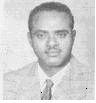


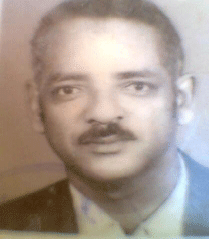
The ELM Charter emphasized the Moslems and Christians were brothers, and their unity was what made Eritrean nation
1942-2016
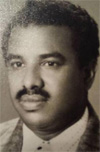
This compilation is dedicated to memory of Mahamoud Ismael Al-Haj who was the first clandestine of Mahber Shew'ate( Harakat)
Researched and compiled by Resoum Kidane 31.08.18
To mark the 60th anniversary of the foundation of the Eritrean Liberation Movement (ELM or Harakat), itsmembers should be remembered by the Eritrean people and future generations. On this occasion, the victims of the 1958 general strike should be remembered also by the Eritrean people. The strike was organised by the members of Eritrean Workers' Association. Sadly, the strike was brutally crushed by the security force on the 10th March 1958.
Following its crushing, the ELM was founded, on 2 November 1958, at Port Sudan, by Mohamed Said Nawd, Mr. Salih Ahmed Eyay and other Eritreans exiled in Sudan. According Iyob (1995:99) Mohamed Said Nawud, the principal leader, had contacts with the Sudanese Communist Party(SCP), which at that time was one of the best organized of such groups in black Africa.
After the foundation of the ELM (Harakat), Salih, Yasin and Mohammed el-Hassan returned to Eritrea from Port Sudan and then expanded inside Eritrea as a clandestine organisation known as Mahber Shew'ate (Union of Seven) Mahamoud Ismael Al-Haj was the first clandestine member of Mahber Shew'ate( Harakat) .The ELM’s priority was to first raise the Eritrean people’s national political awareness that can then be used to launch a popular revolution to oust Ethiopian occupation.
The ELM was urban based and its members included Eritrean police officers, civil servants, intellectuals and merchants among many other professional categories. According Mahamoud Ismail Haj and Suleiman Ibrhaim, it was unprecedented in Eritrean society, coming from different ethnic and religious groups and social classes - teachers, workers, intellectuals, petty traders and policemen [Gaim quote Mahamoud Ismail Haj, personal communication, London, October 16 2005]. Kibreab (2005) adds that many of the other groups formed in the 1960s and 1970s, such as the ELF, PLF 1, Sduha Eyla Group, the Self Natsenet of Ala Group, Obel Groupwere based on distinct ethnic identity.
The core principle of the ELM, based on a secular pan-Eritrean nationalism, activated through its politics of protest and reconciliation, set the foundation for a rich nationalist culture. All this had a profound effect on the defiant youth of the 1950s, the same generation that was later to construct the basis for modern Eritrean nationalism (Iyob (1995)
Mahamoud Ismail Haj and Suleiman Ibrhaim who were active members of the ELM (Minkesikas Harenet Eritrea/Harakat) argue that most ELM members were politically conscious and experienced members of political and civil society associations and debates. More important they say, from the outset the ELM had a democratically elected leadership and a clear political program.
Although the Moslem-Christian schism and ethnic rivalries resurfaced in the course of the armed struggle in the late1960s and 1970s, this brief period of reconciliation in the 1950s was never forgotten, becoming part of the reinvigorated social foundation of a pluralist Eritrea. Mahber Shew'ate (Union of Seven) played a big role in the rebirth of Eritrean nationalism 1950s and early 1960s.
The nationalist symbol engendered during this brief period were later integrated into the EPLF's internal and external nationalist mobilization for a cultural renaissance Iyob(1995: 103-4] .Arkokabay Team(2010) also states that the ELM managed to unite Eritrean Muslims and Christians to fight for their self-determination and independence, which was finally achieved in 1991.
By and large the Eritrean Society particularly the youth would be in a better place if the Eritrean Revolution had been led byHarakat instead ofJebha and Shabia. The ELF leaders intentionally undermined the genuine initiation of the struggle by the ELM. However the timing of the armed struggle was launched by the ELF leaders without any clear programme merely to compete with the Eritrean Liberation Movement (Harakat). Alsayed (2009) also states that the ELM’s (Harakat) path for liberation and independence was interrupted and later replaced by the ELF whose leaders were arrogant, intolerant of differences of opinion and resorted to subduing opponents by force. As a legacy of the founding leaders of Jebha, this culture continued with the Jebha and Shabbia in the 1970s and ‘80s, and still characterises the opposition and PFDJ leaders to this day.
Most of the present generation have sufficient knowledge of the heroes who fought against the Ethiopian occupation during the armed struggle which was launched by Awate on 1st September 1961 but the patriotic heroes who were members of Harakata or Mahber Shew'ate (Union of Seven) and became the first victims of the Ethiopian security forces as well as the Eritrean Police Forces in the late 1950s and early 1960s are largely forgotten. In the history of the Eritrean people struggle for independence, the only genuine and progressive liberation movement was the Eritrean Liberation Movement (Harakat) whose members believed that Muslims and Christians are brothers and their unity make Eritrea one.
Although since the launch of the armed struggle many publications have appeared on the history of the Eritrean people’s struggle for independence led by the EPLF and ELF, the history of the ELM and specifically during the armed struggle (1961-1991) is neglected.
The overall purpose of this compilation is to highlight the Eritrean people’s struggle for civil and political rights in the 1950s; to provide a snapshot on the Trade Union formation and its suppression (1952-1958) including the formation and demise of Harakat (1958-1965);to draw attention of the younger generation to the fact that the Eritrean people’s struggle for independence from the Ethiopian rulers was not started by the ELF leaders. Since mid-1990s the history of ELM (Harakata Shew'ate) has been mentioned in publications by a few authors. The views and analyses of these writers, presented in this compilation, confirm that the Eritrean struggle for independence was started by the ELM (Harakat) in the late 1950s not in 1961.
In light of the above, this compilation provides a historical overview of the forgotten Eritrean nationalists of the 1950s who contributed greatly to the rebirth of Eritrean nationalism and raised awareness of the civil and political rights which played a significant part in the struggle for independence and in its achievement, in 1991.
The research work presented in these compilations are divided chronologically into nine sections.
The birth of Eritrean working class and genesis of colonial urban areas(1890-1949)
A brief chrociological history of the Eritrean Workers' Association in the 1950s
Resistance to Ethiopian interefence in Eritrean affairs (1952-1958)
The formation of the Eritrea Liberation Movement (Harakat) 1958
Flourishing of professional associations 1950s and early 1960s