




Mysterious death of Tuku'e The ELF & EPLF leaders'crimes
Crimes ELF and EPLF's victim civilians Mysterious death of Chekini


Mysterious death of Ibrahim Afa Mysterious death of Abraham Tewelde
2026-10-30
Fact and Evidence Part III: [1953-1959) Rebirth of Eritrean nationalism and early development of the Independence struggle
Researched and comipled by Resoum Kidane[07/06/10]
Although the ELF and EPLF leaders tried to persuade the public that the Eritrean struggle was started on 1st of September 1961 by the ELF, through commemoration of the armed struggle for national liberation every year on 1st September, the Eritrean people's struggle for independence goes back to the flourishing of the Eritrean political parties in the 1940s, and in the 1950s with the emergence of the following organizations:
1.The Workers Syndicate of Eritrea was founded with the help of Ato Wolde-Ab Woldemariam in late 1952. According Gebre-Medhin, (1989:171) the veteran workers and agitator Aldo Mafess, and another member of the Italian Communist Party, Carlo Bregaro played important roles in the formation of the Syndicate. Gebre-Medhin adds that the Syndicate was a political as well as a trade-union organization which played a great role in the Workers' strikes and boycotts to frustrate Ethiopia's ambition in Eritrea. Gebre-Medhin adds that during this period the self-employed tailors also formed an underground organization. The workers (dock and railroad workers) defended democratic rights such as strikes, demonstrations and associations enshrined in the Eritrean constitution
2. Three youth organizations were founded in 1953. The one commonly called simply Shabab which was the Moslem Youth League. The second one called Partite Giovanile Federalists Eritrea (The Young Federalists) held their first organizational meeting on Dec.26, 1953. According to Killion (1997:50) The Young Federalists had about 60-80 members and their first leaders was Tesfai Redda from Dekemhare, who was repeatedly imprisoned and tortured. Both organizations were composed primarily of young men, representing the new and much more militantly anti-Ethiopian nationalist, generation of Eritreans who came of age after the demise of European colonial rule (Killion 1997:51). By 1958 the Young Federalists were part of a widespread " Federalist-Independence movement" Their ideology had gone beyond the idea of simply preserving Eritrean autonomy to seeing Federation as a " stepping stone" towards independence. (Killion 1997:50). The third youth organization called the Eritrean Youth Peace Council. According to Berketeab(2000:169) an organization called the Eritrean Youth Peace Council emerged, which was an amalgamation of the Youth wing of the Moslem League and the Unionist Party.
3. Two professional associations, the first known as the Asmara Teachers' Association following the strike the Teachers' Association was banned, its Club closed and its leaders (such as Issayas Tesfai, A bebe Yasin & Tsegai Negash) were briefly arrested, and the other was called Mah'ber Memheyash Hagarawi Limidi ( Association for the Development of National Culture M.M.H.L) was founded in 1957 when its 45 members staged several singing and drama productions in Mendefera and at the Cinema Impero in Asmara ( attended by 3,000. Amine Gebre-Kirstos a participant and worker at the Government Printing Press, along with two other M.M.H.L members were imprisoned and tortured for 3 months following the Asmara show.
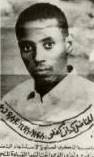
All the above organizations took an active role in the resistance against the violations of the Federal Constitution between 1952 and1958. For example between 1954 and 1956 sporadic student strikes were common, especially in Asmara. ; in 1958 there was another two-week general strike of workers, students, and self- employed which paralyzed Eritrea . This strike called by the underground Eritrean Labor Union Federation protesting the violations and coercion took place in all major Eritrean cities but it was suppressed by force which caused for the death of 88 demonstrators and 450 wounded, and thousands were jailed. Killion added that the General strike was participated by the workers included the Young Federalists, the Muslim Youth League and the Asmara high school students led by Tuku'e Yehedego ( Killion, 1997: 40). In protesting against this in March and April 1958, eighteen prominent citizens including Omar Kadi (note) were arrested for sending a telegram to the UN Secretary-General protesting against Ethiopian violations of UN Resolution 390A(V). As a result, coercion of the Eritrean people by the Ethiopian government and the four days’ general strike which greatly contributed in raising political awareness that led to the rebirth of Eritrean nationalism.In the late 1950s the Eritrean people began to search for an alternative way to challenge the Ethiopian policy of coercion. This generated Christian-Moslem co-operation, leading to the emergency of a "modern nationalist underground political movement led by the Eritrean Liberation Movement (ELM ) Bereketeab(2000:170).
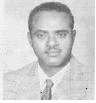
On 2 November 1958, five-eight young Eritreans, among them Mohamed Said Nawud, Saleh Ahmed Eyay,Yasin-el Gade, Mohammed el- Hassan, and Omar Gonahta met at Mohammed Saed Nawd’s house at Hay Al-Transit in Port Sudan and formed the Eritrean Liberation Movement (ELM – Mahber Shew'ate) that spread all over Eritrea within a short time to conducted resistance to Ethiopian authority in Eritrea
According to Gebre-Medhin, Mahber Mahber Shew'ate (Union of Seven) began to coordinate the various sectors of Eritrean struggle in the urban areas of Eritrea as well as Ethiopia. The Eritrean Liberation Movement (Harakat) played a great role in organizing, raising national consciousness through distributing leaflets, and its annual student demonstrations in the main cities.
- Source column 1
- Source column 2

Saleh Ahmed Eyay
- Source column 3

Yasin-el Gade
- Source column 4

Omar Gonahta
- Source column 5
Mohammed el- Hassan
The founder of the ELM, all Moslems, were conscious of the harmful effects of the religious divisions which had pitted Christian against Moslem in the 1940s. (Iyob 100). From the outset, the ELM's leaders attempted to overcome the religious hostilty fanned by the Ethiopian and Eritrean Coptic Churches in the competition for power during the British Administration, Ioyb added.Mohamed Said Nawud, the principal leader, had contacts with the Sudanese Communist Party(SCP), which at that time was one of the best organized of such groups in black Africa.(Iyob, 1995:99). The goal of the movement was ‘to wrest the administration of the Eritrean people from Ethiopia by various means ( Markakis 1987: 107). After Salih, Yasin and Mohammed el-Hassan returned to Eritrea from the meeting of Haraket which was held on 2 November 1958.
- Source column 1
- Source column 2
Salih Iyay became the representative of Harakat in Keren, Yasin was stationed in Asmara represented Kebesa and Mohammed el-Hassan went to Asab. The founder of the ELM, all Moslems, was conscious of the harmful effects of the religious divisions which had pitted Christian against Moslem in the 1940s. (Iyob 100). From the outset, the ELM's leaders attempted to overcome the religious hostility fanned by the Ethiopian and Eritrean Coptic Churches in the competition for power during the British Administration, Ioyb added.
Mohamed Said Nawud, the principal leader, had contacts with the Sudanese Communist Party(SCP), which at that time was one of the best organized of such groups in black Africa.(Iyob, 1995:99). The goal of the movement was ‘to wrest the administration of the Eritrean people from Ethiopia by various means ( Markakis 1987: 107). Markakis adds that as a model for the organization they chose the cell structure used by the Sudanese Communist Party. He adds that cells of seven members were formed, and each member was instructed to recruit six others to form a new sell. Thus movement spread amoeba-like in the towns of Eritrea. To avoid the sectarian divisions that had marked Eritrean political activities in the 1940s, the ELM activists set out to recruit within the urban Christian community, stressing, in the words of the preamble to the ELM status, that “ Muslims and Christians are brothers, and their unity makes Eritrea one “ (Markakis also added that Christian response was encouraging, and the movement became known among them as Mahber Shew'ate (Association of Seven)
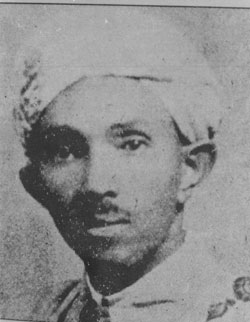
The first clandestine cells of Mahber Shew'ate (Association of Seven) were established by Yasin el-Gade(a tailor from Asmara) after he returned to Asmara, Tuku'e Yihidego and Kahasai Balbi
- Source column 1
Yasin el-Gade
- Source column 2
- Source column 3

Kahsai Bahlbi
Some members of the first clandestine cells of Mahber Shew'ate
- Source column 1

Mahmmod Ismael Al-Haj
- Source column 2

Saeid Moh.Saleh
- Source column 3

Mussa Araho
- Source column 4

Abdul Salam
- Source column 5

Teklay Haraka
- Source column 1

Nour Abdul Hai
- Source column 2

Ahmed Bin Abdulqader
- Source column 3

Welden kel. Abrha
- Source column 4

Mehari Debessai
- Source column 5

Abdul Salam
- Source column 6

Mohammed Burhan Nagash
Alsayed (2009) states that for the first and perhaps last time in Eritrea’s delicate history, the ELM managed to appeal to Eritrea’s diverse society, united Eritrean Muslims and Christians, Highlanders and Lowlanders, infiltrated institutions including Eritrea’s police force, spread its organisation and mobilisation cells of 7 (famously known and still remembered by our Kebessan counterparts as “mahbar shaw3atte” and in the lowlands/Muslims as “Haraka or Haraket”). By April 1959 clandestine cells had been established almost all Eritrean towns and the first conference of the ELM were held in Asmara in 1960. According to Ammar (2004) there were 40 participants including: Mohammed Saed Nawd, the ELM co-founder-leader, Salih Iyay, Yassin Uqda, Adem Melekin, Mohammed Burhan Hassen, Ali Berhatu, Tiku’e Yihdego, Kahsai Bahlbi, Mohammed Omar Akito, Abdulkeri Before the conference Salih Iyay was stationed in Keren represented Senihit, Sahel, Baraka and Gash m Saed Qasim, Sheikh Saddadin Mohammed, Khiyar Hassen Beyan. whereas Yasin was stationed in Asmara represented Kebesa. After the conference Asmara became the centre and Yasin, Tuku'e and Mohammed Birhane led the movement ( Bereketeab, 2000:220)
In the process of the Eritrean struggle for independence, the Mahber Shew'ate or Haarakat had contributed a great deal to narrowing the rift between Christian and Moslem, which had been developed by the Unionists in the 1940s; through employing the slogan “Muslims and Christian are brothers, and their unity makes Eritrea one”The founder of the ELM, all Moslems, were conscious of the harmful effects of the religious divisions which had pitted Christian against Moslem in the 1940s. (Iyob, 1995:100). According to Killion (1998:142) the ELM started recruiting Eritreans under the policy that Moslem and Christian is brother in Eritrea, Ethiopa, Sudan and Saudia Arabia
- Source column 1
Based on this policy in 1959, the ELM sent Tahir Ibrahim to contact them but he was met with suspicion verging on hostility, except Wolde Abe Wolde Mariam, who later agreed to become the movement’s representative in Egypt (Markakis 1987:107). In connection with this, Killion (1998:433) wrote that the sectarian politics of most of the Muslim exile community in Cairo left Woldeab isolated until 1959. With the rise of the secular Eritrean Liberation Movement ( ELM) whose labour-oriented political programme coincided with Woldeab as own political vision, he returned to political activity serving as the ELM's Cairo representative.
- Source column 2

- Source column 1
Furthermore, According to Markakis ( 1987:107) Tahir returned to Cairo with the same mission in 1960, only to meet with unconcealed hostility this time from the exile led by the former president of the Eritrean Assembly, Idris Mohammed Adem who was then in the process of organizing the Eritrean Liberation Front ( ELF)
- Source column 2
Fact and Evidence Part IV: [1960-1965]The formation of the ELF in competion with the ELM
Main page :Fact and Evidence The role of the Former revolutionary and opposition leaders
ehrea
ehrea.org © 2004-2017. Contact: rkidane@talk21.com