Why such a torture and ill treatment for someone who asks his/her right? Remembering of the Journey to the Wia Detention Camp: 10 years ago
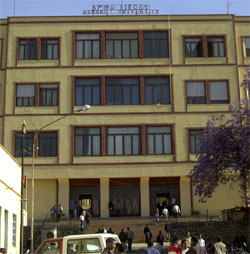
The event that I will never forget as long as I live by S.Y. Jan. 2011
1.WiA detention camp and the forced summer work program
Many have been said about WiA detention camp, and the situation in which the students were. It was one of dark spots in the history of Asmara University and Asmara university students. As a student of the University, I have been through all the sufferings the students have gone (e.g., WiA detention camp and the forced summer work program in the malaria infested area of Alighider). As we all know, the event at WiA has taken a life of two students, and many others have encountered health problems, including mental illnesses. I am a witness to the barbaric treatments the PFDJ and their military leaders have had on the students. It may seem too late to come across such a witness, but as we all know and imagine it is always risky to write such kind witnesses while at Asmara. I have been thinking of writing such a brief witness since that moment, but it was not easy for me until I left the country and I knew about the Eritrean Human Rights Archives quite recently. I am now trying to write a brief on an event that I will never forget as long as I am alive.
2.Background to the event
It was in spring 2001 that the PFDJ leaders, through their puppet Asmara University ex-President Dr. Woldeab Issak, announced a plan engaging all university students in a summer work program. The program was to “assess the damages” caused by the Eritrean-Ethiopian “border” conflict between 1998 and 2000. We have been informed that the program is “war damage assessments”, but we never knew their motives behind that.
The students were obliged to participate in the mandatory summer program and would be given 800 Nakfa as compensation. Prior to this, we were told that the amount was attractive and covers all of our expenses during our stay in the program. The president of the University however informed the student union committee that students are expected to earn only 800 Nakfa, and are expected to cover all of their expenses including transport cost from the 800 Nakfa. I don’t remember the exact day, but the students’ union called a meeting and hundreds of students gathered in the Auditorium for the meeting. I came to the meeting along with other friends. While in such a situation, the president of the student union, Semere Kesete, has been arrested. The issue was not any longer about money, but the student union president. The students plainly stated that if the president of the union is guilty of any crime, he should be presented to court of law. As a result, the president of union was presented to a court law on the 9th of August, 2001. On the same day, students were asked to depart for the mandatory work, but all the students failed to report, rather some of them have showed-up on the court. The case has been postponed for some other day.
On the 10th of August, hundreds of students gathered on the courthouse to hear Semere Kessete’s verdict. While a number of students in the courthouse, tens of soldiers surrounded the courthouse and started to beat and threat the students. They attempted to seize all the students, but since the number of students was pretty big they were not able to seize everyone. A number of students were however picked and forcibly taken to Asmara Stadium not only from the courthouse, but also from different parts of the city. The students spent the night in the Stadium and were taken to Wi’a on the next day.
On the 11th of August, I was told by a friend of mine “we all are asked to report to Asmara Stadium by tomorrow [August 12, 2000]. We were so terrified with the situation and some of our family members were so frightened, and starting from the early morning a number of students started to report. I was actually picked by “military police (MP)” on my way to a friend to ask him about the situation and joined my colleagues at the stadium. Gradually, large number of students was flocked into the stadium and we spent the whole day without having breakfast and lunch. In the early afternoon, heavy trucks entered the stadium and we were ordered to get in to the trucks. There were some students, who questioned and opposed the action, but they brought nothing except further torture and harassment; they were beaten by the soldiers and I remember one student whose arm was broken.
3.Journey to the Detention Camp
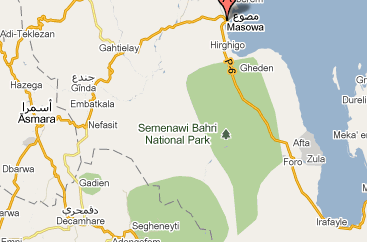
On the same day, in the afternoon, we started our journey and headed to Massawa, but we never knew where our destination would be. I met Yirga in the truck and we began our journey together along with other students. We travelled all the way to Massawa and passed Massawa and headed to the Massawa-Assab road. Finally, we arrived in a place called “WiA”, a name that I have never heard of, between 9:30 and 10:00pm. We spent the night at the front gate of the “Military Training Center of the 35th Division”. I didn’t know until the early morning that we were encircled by soldiers with machine guns. That was one of the most freighting aspects of the journey we had so far otherwise we had faced more that during our stay in the camp. The females were separated from us on that morning and we were ordered to head towards northeast part of the camp. We have seen a number of military barracks to our left and of course soldiers in the barracks. They were taking us through the longest way to our destination, but later we have realized that there was a shortest path to the spot where we were finally taken. It was during this time that many students started to faint due to heatstroke and Yirga has started to feel bad as well on our way. I personally asked one of the soldiers for help, he didn’t give me any attention. He rather ordered me to continue.
4.The event that I will never forget as long as I live
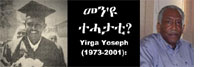
They finally took us to a stream which flows from the Easter escarpment of the country to the Red sea. Before approaching the stream, Yirga’s condition was getting worse and worse, but nobody was giving any attention to the students who were fainted and dehydrated. Finally, we all arrived at the stream and immersed ourselves in the stream, but Yirga was not able to support himself to move from the river to the river bank. From that moment on wards, he lost his conscious. We were there many students and tried to help him with all possible means we could. Later, one of the soldiers suggested us to take him to the other side of the river where there were some shrubs (short acacia trees). How can we take him there? He is not supporting himself anymore. One of the students however carried him, and took him to the other side of the river. Some students were fetching water from the river, and we all tried to save the life our colleague and friend. Soon after we took him to the other side of the river, I once again asked personally one of the soldiers of help, but didn’t give me any attention. Another student asked for help again, nothing. He was in such a situation for more than one two hours, but no body was giving us/him any attention. Later, one of the soldiers who was walking around saw Yirga and realized that Yirga was in a very bad situation. He told us that he is going to ask for a truck to take him to the clinic, but it was very late. Yirga’s body system was not working properly; he was not controlling himself anymore. The soldier who saw Yirga’s condition came back immediately and with the help of the soldier and other colleagues we loaded him and other two students who were dehydrated, into the Water truck. I have never seen a person who is dying of heatstroke and never heard of all the indications. I have later learned that Yirga died in the clinic of the 35th division. Some government officials were claiming that Yirga has died in Massawa Hospital, but that is not the reality as far as I can tell.
- Source column 1
I always ask myself. Why such a torture and ill treatment (not only to the students of Asmara University, but also to all Eritreans who are suffering) from a group who considered themselves as “freedom” fighters?
I always wonder what the motives of these people “PFDJ” leaders are for:
Their endless torture of Eritrean young generation?
Demising the only higher institution in the country (Asmara University), which have the source of human resources in all aspects of the country’s sector (Education, Health, Agriculture, and more many)
Denying the fact that majority of the productive adult population is fleeing the country
Let alone the PFDJ leaders, have you ever asked such questions to your self? If so, do you ever think of the motives of these people?
May the Almighty God rest his Soul in Peace!
May be Peace, Freedom and Justice to All Eritreans who are suffering from the brutal dictatorship “leaders” of PFDJ
God Bless Eritrea,
S. Y. (selamyisfen@yahoo.com)