Skip to content
EHREADocument library

Interface: EnglishDocuments retain their original language

HTML English

Shimelba & Mai Aini Refugee Camp; FINAL DATABASE

Captured
Not recorded
Source status
captured · Local file exists; original HTTP status unknown
Original source ↗

http://www.ehrea.org/shimelba-mai-aini-refugee-camp-final.html

Read in the document library →

Shimelba and Mai Aini Refugee Camp

Classic

Pages

  1. Apr

    11

    Shimelba camp; FINAL PICTURES

    Shimelba and Mai Aini Refugee Camp Videos http://www.youtube.com/watch?v=Lcd0mG6ZF_M (video about youth in Mai Aini refugee camp) http://www.youtube.com/watch?v=EgX7f7YZfdU (video of life in Shimelba) Shimelba Camp Pictures
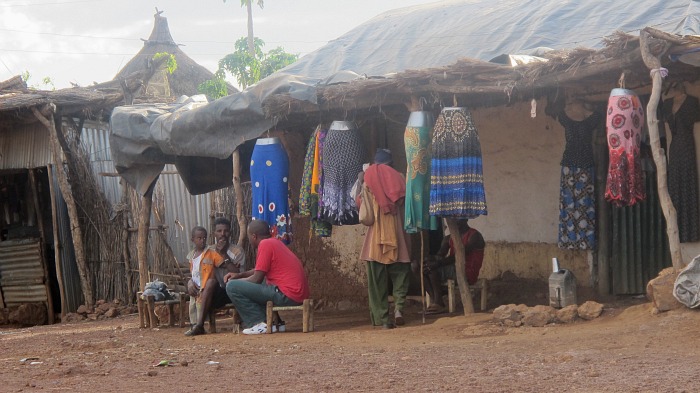
    Fewer than 10% of Shimelba refugees are employed, and those who are set up small businesses from funds sent to them from relatives in the US (Cultural Orientation Resource Center). The businesses include beauty salons, retail shops, and restaurants (Cultural Orientation Resource Center).
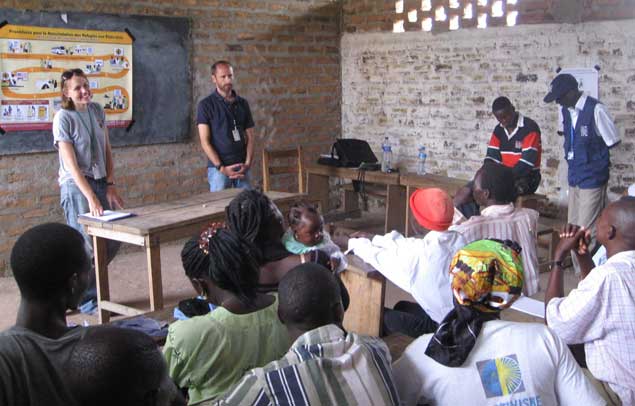
    There are aid agencies that try to assist refugees who don’t have access to resources. They help them participate in the camp economy by giving them seed money, start-up grants, and for those who submit business proposals, in-kind equipment donations (Women’s Refugee Commission, 2008). There are different aspects looked at when selecting businesses. Factors include variability of activities proposed, market needs, and distribution of opportunities within the ethnic groups (Women’s Refugee Commission, 2008).
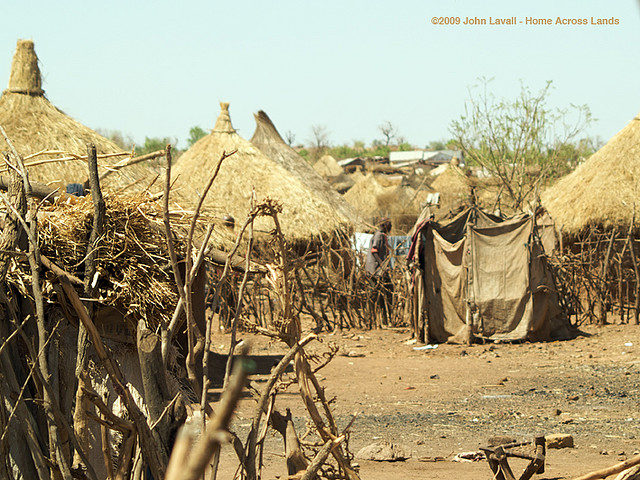
    The landscape of the camp is dry and arid, and most of what is available is used to build shelter. Housing is not provided for the refugees so mud, sticks and pieces of scrap metal and plastic are gathered to construct homes (COR, 2010).
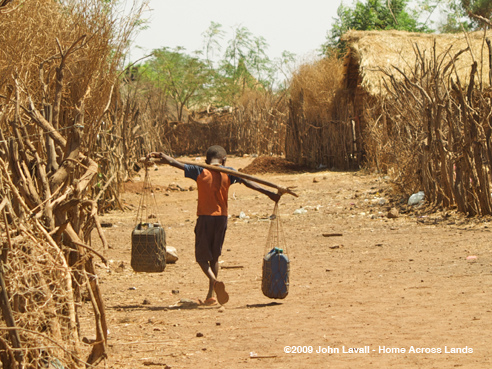
    Environmental degradation has made the once lush and shady forests of the area now dry and arid. The land cannot sustain any kind of agriculture and the refugees rely solely on the IRC to provide clean drinking water to the camps (IRC.com, 2010). The canteens have to be filled and carried back to the homes for everyday water use as there is no running water in any of the homes.
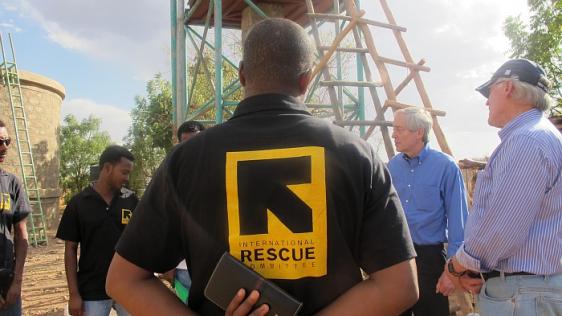
    In Shimelba, the IRC along with the ARRA and ZOA are the main organizations in charge of security for the camp. The IRC also primarily focuses on children, women, health, water and sanitation within Shimelba (IRC.com, 2011).
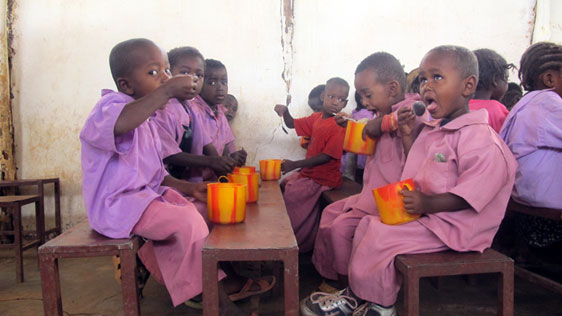
    Pre-school children at the Shimelba refugee camp in Ethiopia eat a nutritious snack of porridge from colorful plastic cups. The International Rescue Committee is providing education for all age groups in the camp, from pre-school to adults. We are also providing vocational and skills training. (IRC, 2012)

    [External image reference]

    Posted 11th April by Shimelba Camp; Mai Aini Camp

    0

    Add a comment

  2. Apr

    11

    Shimelba & Mai Aini Refugee Camp; FINAL DATABASE

    Anaise Prince Kiki Saveriano Gian Grant Jen Egeberg Deanna Boucher

    Shimelba Refugee Camp

    The Shimelba camp refugees come from Eritrea, a country in Africa (COR, 2010). There are two major ethnic groups that comprise the movement to Ethiopia. They are the Tigrinya and the Kunama (COR, 2010). In 1998, war erupted between Eritrea and Ethiopia (COR, 2010). In 1991, Eritrea gained independence from Ethiopia and tensions have been elevated ever since (COR, 2010). In 1998, a dispute between the borders occurred which lead to a two-year conflict (COR, 2010).

    Due to this conflict, many Tigrinya and Kunama civilians fled Eritrea (COR, 2010). Reasons include avoiding conscription and escaping persecution by the Eritrean government, who accused civilians of siding with Ethiopia (COR, 2010). Thus, the Shimelba refugee camp was created, located in Northern Ethiopia, close to the Eritrean border (COR, 2010).

    Living conditions in the camp are crowded, with five to eight people sharing only one room (COR, 2010). Refugees receive monthly rations of food which are provided by the United Nations World Food Program (COR, 2010). Refugees are fairly healthy, though there are cases of HIV and AIDS (COR, 2010). Shimelba refugees are in a tough position. They cannot go back to Eritrea or they will face persecution (COR, 2010). They are also not accepted in Ethiopia because of political issues (COR, 2010). The camp is in one of the most highly militarized regions in Africa, and if war erupts again, refugees would not be safe in the camp (COR, 2010).

    Environment in the Shilmelba Refugee Camp

    In order to escape a forced draft on seventeenth birthdays, Eritrean people started fleeing to Ethiopia and eventually constructing the Shimelba refugee camp. Currently around 11,000 refugees inhabit the camp, which in itself is only 45 kilometers from the Eritrean border (COR, 2000). Out of the 11,000 refugees, only 10% are employed because Ethiopian law dictates that they cannot work outside the camp. The small number of refugees that work do so on a small strip within the camp called Little Asmara (COR, 2000). A half a century ago, the land that now houses the Shimelba refugee camp was lush forests filled with animals, now it is almost desert like due to environmental degradation (COR, 2010). The occupation of the area has left the land arid and almost completely useless. It cannot sustain any agriculture and the camp inhabitants are completely reliant on the United Nations World Food Program for monthly rations (COR, 2010). Refugees themselves constantly report that the food rations are not enough and that they sometimes have to sell some of what they are given for other daily necessities. Collecting water for the day is part of the daily ritual for young kids. There is no running water in any of the houses, resulting in the task of going to one of the few water taps that are scattered around the camp. The International Rescue Committe (IRC) is the main supplier of water in an otherwise arid environment with no natural resources for drinking (Rescue.org, 2010). While children have this opportunity, women and men occupy their day doing things like chatting, gathering wood, wash clothing, and drink (COR, 2010).

    Economic Activities Among Shimelba Camp Refugees

    Economic activities among refugees in the Shimelba camp are limited. It is hard to find work when a majority of them are restricted to staying inside the camp. The Ethiopian government does not allow camp refugees to work for wages (COR, 2010). Some are employed by non-governmental organizations and help to provide services within the camp (COR, 2010).

    Training for some skills is available within the camp. In 2010, 300 to 400 Shimelba refugees received training in electrical installation, carpet making, tailoring, dyeing and silk printing, knitting, leather craftwork, and embroidery (COR). Fewer than 10% of Shimelba refugees are employed, and those who are set up small businesses from funds sent to them from relatives in the US (Cultural Orientation Resource Center). The businesses include beauty salons, retail shops, and restaurants (Cultural Orientation Resource Center). Since refugees do not have access to local markets to sell goods, women end up in prostitution and sexual exploitation (Arrault & Miquel, 2007).

    According to the Women’s Refugee Commission, some women in the camp collect firewood for cooking and to sell (2008). This comes with consequences, though. Trees are being depleted with creates a competition for resources between refugees and the local population (Women’s Refugee Commission, 2008). Also, collecting wood is mostly a female job, and they are at high risk of being attacked and harassed by males (Women’s Refugee Commission, 2008).

    There are aid agencies that try to assist refugees who don’t have access to resources. They help them participate in the camp economy by giving them seed money, start-up grants, and for those who submit business proposals, in-kind equipment donations (Women’s Refugee Commission, 2008). There are different aspects looked at when selecting businesses. Factors include variability of activities proposed, market needs, and distribution of opportunities within the ethnic groups (Women’s Refugee Commission, 2008).

    Health

    A commonality between both the Mai Aini and the Shimelba refugee camp is the presence of the UNHCR. They have established HIV/AIDS prevention programs in both camps. In the Shimelba Camp there is a health clinic ran by the UNHCR alongside the International Rescue Committee who runs the vision clinic. In the Shimelba camp, children under the age of 10 are at a high risk for Vitamin A deficiency and Trachoma. A lot of children in the camp often do not watch their hands and then proceed to rub their eyes. Also in the Mai Aini camp there are a lot of children who have fled Eritrea on their own now currently live in the camp by themselves. These children are often depressed because they live without their parents and are often unable to go back home.

    In the Shimelba camp there has also been different reports of physical abuse being an issue. Based on statistics from 2006, the camp dynamics is made up of 72% males this leads to females sometimes being marginalized and other times they are viewed as valuable. BMC Public Health conducted research on physical abuse towards females in the Shimelba camp and found that out of 380 subjects approximately 38.9% were either currently in an emotional or physically abusive relationship. This is a health issue because females are being physically harmed. In addition the emotional abuse that each women faces while it is not quantifiable still affects females and the possibility of Post Traumatic Stress Disorder, Depression or other psychological issues may arise.

    In the Shimelba camp, there are two different ethnicities, the Tigrinya and the Kunama. The Kunama’s often deal with health issues by consulting traditional healers (who tend to be females). The Tigrinya on the other hand prefer to go to Addis Ababa for aid, however they also do have traditional healers.

    In the Mai Aini refugee camp malnutrition is an important issue; in a single month refugees receive, 6kg of wheat, 900ml of cooking oil, 1.5kg of Fava beans or chick peas, 1.5kg of Fafa, 400g of sugar and half a cup of salt. According to the Citizens for Democratic Rights in Eritrea refugees have no monetary source and are thus forced to use half of their monthly wheat allotment to pay for their wheat to convert to flour.

    Political Activities Of The Shimelba Refugee Camp

    The Shimelba Refugee Camp is located in Ethiopia and consists of residents who have fled from Ethiopia’s neighboring country Eritrea. The camp is located outside of Shiraro in Northern Ethiopia, about 45 kilometeres from the Eritrean border. The information I researched stated that in 2010 there were 44, 800 refugees from Eritrea in Ethiopia (UNHCR, 2010). The Ethiopian government runs the camp, and the UNHCR oversees all of their operations. The joint UNHCR / government duties include improving the coordination and resource management for refugee programs, as well as strengthening contingency planning. Together, these organizations interact with one another and other international governments for resettlement opportunities and humanitarian aid. The Central Committee is elected by the camp population, and represents the refugees on various issues, liaising with NGOs and the Ethiopian government, as well as supporting the management of the camp (COR, 2010). The Ethiopian government prohibits refugees from being employed or participating in political organizations, and there are very few productive activities for refugees to partake in (COR, 2010). By limiting the rights of the refugees the government has the ability to protect the work opportunities and safety of the Ethiopian citizens. For quite some time the Ethiopian government made local integration impossible, and the Shimelba residents were not allowed to work outside of the camp, resulting in an employment rate of 10% (COR, 2010). The Ethiopian government created an official organization that takes on the task of registering, processing and monitoring the refugees in order to manage the circumstances of refugee life (Harmon-Gross, 2009). The organization, the Agency for Refugee and Returnee Affairs works closely with UNHCR and other non-governmental organizations to maintain the operation of the refugee regime (UNHCR, 2010). The Agency for Refugee and Returnee Affairs, also known as the ARRA, runs the camp while the UNHCR operates in the role of the contractor. UNHCR and ARRA have many intersecting policies that maintain the camps in an orderly fashion, but that undermine the human rights of refugees. Some of these policies include restricting the freedom of movement of refugees and preventing them from accessing paid employment (both human rights guaranteed by international law) and indirectly, by not strictly enforcing women‘s rights within the camp (Harmon-Gross, 2009).The other non-governmental organizations that are present within the camp are the International Rescue Committee and the ZOA, a German nonprofit organization. The International Rescue Committee supplies the camp with some of their major necessities including clean drinking water, sanitation, and education. Along with that aid they supply assistance and support to disabled people as well as youth, along with assisting women who have suffered sexual or domestic violence. The ZOA operates training programs that help the refugees gain income-generating skills. The United Nations World Food Program provides food; refugees have a standard monthly ration of wheat cereal, white bean legumes, lentils or peas, fortified vegetable oil, salt and sugar. Their water supply is maintained at 20 L per day per person. Unfortunately, there is not a good relationship between the ARRA, UNHCR and the refugees, there is a noticeable lack of trust and the refugees are dissatisfied with their living conditions.

    Security and War

    Ethiopia and Eritrea have had poor relations for quite a while therefore causing many security concerns for the host country Ethiopia. The two countries were in a war for 30 years that resulted in Eritrea’s independence from Ethiopia, causing even thicker tensions between the two that eventually led to a 2-year border war between 1998-2000. During this time many people died causing Eritreans to cross the border to escape danger and seek asylum in Ethiopia, specifically in the Shimelba refugee camp. Because of the political tensions, it is now illegal in Eritrea for an individual to cross the border into an enemy state. So those that do cross are now risking being seen as collaborators of the state and putting themselves at great risk. (COR Center Refugee Backgrounder No. 5, 2010, 1). Eritreans also fled their country because of a forced term of national service with an unknown end time as well as a worsening economic situation (UNFPA, 2007, 22). Additionally, Shimelba’s location adds to the host security concerns because it is only 30 kilometers from the Eritrean border. This is a big worry since, especially recently, fears of another border war between Ethiopia and Eritrea is surfacing, therefore the refugees in Shimelba would be at risk being so close to the conflict. As of March 2012, Ethiopia raided 3 rebel led camps in Eritrea now resulting in a fear that Eritrea may strike back (BBC News, 2012). Additionally, Shimelba is located near artillery shells and land mines, which is another security concern for the refugees. Therefore the Ethiopian government has made movement in and out of the camp is greatly restricted where a refugee must attain a pass permit in order to leave in an attempt to maintain security (EHREA, 2007, 1). In Shimelba, interpersonal violence is a key contributing threat to the camps overall security. This concern has been made clear by an overwhelming amount of sources, therefore resulting to be a very valid and real claim and fundamental concern within Shimelba. This concern could be due to the drastic difference in the amount of men to women in the camp with a ratio of 6:1. Therefore, concerns revolving around women walking far distances to fetch firewood as well as poor lighting in the camp become security threats for women resulting in fear of abuse in both situations. (COR Center Refugee Backgrounder No. 5, 2010, 24; 28). Because of the statistics of female domestic abuse, a strong need for protection of women has resulted within Shimelba. In response to this concern, a report from 2007 stated that the IRC had created a “safe space” in the wellness center that is guarded constantly for women’s protection as well as two houses in the camp for women to stay in after staying in the safe space. Initiatives of a neighborhood watch system was also implemented so that everyone could look out for each other within specific zones. Gender based violence training as well as female police officers are also being implemented as a way to alleviate this concern (UNFPA, 2007, 25). Within the camp, the ARRA, IRC and ZOA are the main organizations in charge of security and protection of the refugees under the instruction of UNCHR making sure they are being protected (EHREA, 2007, 1). Unfortunately, the relationship between the police and the refugees could be better. It has been noted by the UNFPA that the refugees apparently would not come to the police to report problems because they thought it would be pointless. The UNFPA goes to explain that the police have a mentality that all the refugees are interested in is resettlement when they come with a problem and likewise the refugees think that the police only see them as spies for the Eritrean government as of 2007. Therefore, according to this particular source, relations could be better between police and refugees for the sake of security and protection (UNFPA, 2007, 25).

    Annotated Bibliography

    Abraha, Michael. "CDRiE Plans to Launch New Eritrean Relief Agency." Assenna.com. Citizens for Democratic Rights in Eritrea, 18 Jan. 2010. Web. 15 Feb. 2012. <http://assenna.com/cdrie-plans- to-launch-new-eritrean-relief-agency/>.

    This was an article written by an Eritrean non-governmental organization that was reporting on the situation in the Mai Aini refugee camp. While the information appears to be credible, we have to keep in consideration that this NGO is from Eritrea and there may be political influences in its description of the refugee camp.

    "An Ethanol-fueled Household Energy Initiative in the Shimelba Refugee Camp, Tigray, Ethiopia: A Joint Study by the UNHCR and the Gaia Association." UNHCR-RLO, Jan. 2006. Web. Feb. 2012. <http://www.projectgaia.com/files/ShimelbaCampGAUNHCR.pdf>.

    This source was about an ethanol-fueled household energy initiative in the Shimelba Refugee camp. It provided an overview of the refugee camp, including statistics about gender relations and population size of the camp. This is a reliable source because this was a research study that utilized reliable research methods to collect and analyze the data.

    Arrault, Matthieu, and Jennifer Miquel. "GBV ASSESSMENT REPORT." UNFPA (2007): 1-52. Web. http://www.unfpa.org/emergencies/docs/gbv_assessment_ethiopia.pdf The United Nations Population Fund is an international development agency with its main goal to promote human rights, specifically sexual and reproductive health and rights by helping countries use research and analysis to help its people. This agency is particularly aimed at bettering individual’s sexual health and gender issues all under the umbrella topic of human rights, so it is therefore somewhat limited with the information it provides. It provides excellent statistics and overviews of particular domestic abuse problems in Shimelba and follows up with what is necessary to counteract it.

    Cultural Orientation Department of JVA/Nairobi. Retrieved March 2012. Website. Cultural

    Orientation Resource Center, Center for Applied Linguistics, Overseas CO Program Highlight,

    Eritrean Refugees in the Shimelba Refugee Camp, Ethiopia. Retrieved from

    http://www.cal.org/co/overseas/Eritreans/Eritreans_in_Shimelba.pdf

    The main topic in this source is the resettlement of Eritrean refugees to the United States. This information covers the processes in which refugees from the Shimelba refugee camp prepare to leave for their new lives in the United States. The source also gives background information on the camps political structure. This source is very detailed, but there is no date for the information that is given, so it is difficult to say what the camps current state is. The research seems legitimate secondary source.

    "Eritrean Refugees from the Shimelba Refugee Camp." COR Center Refugee Backgrounder No. 5

    (2010): 1-6. Web. http://www.cal.org/co/pdffiles/backgrounder_shimelba.pdf

    Cultural Orientation Resource Center provides crucial information about new refugee groups for U.S. resettlement workers ultimately working to make the transition for refugees and the U.S. communities that they resettle in as smooth and informed as possible. They basically serve as an orientation resource for refugees before they are resettled. This source was helpful because it provided statistics and background on the Shimelba refugees. However, it may be limited in what information it provides in terms of what qualifies a refugee to be resettled.

    "Eritrean Refugees in the Shimelba Refugee Camp, Ethiopia." Cultural Orientation Resource

    Center. Web. 4 Mar. 2012. <Eritrean Refugees in the Shimelba Refugee Camp, Ethiopia>.

    This source gives an overview of the Shimelba camp. I learned about skills refugees can be trained in and how they can start their own businesses within the camp. This is the same organization as the previous source and is therefore reliable.

    “Eritrean Refugees in Shimelba camp, Tigray Region, Ethiopia.” EHREA Eritrean Human Rights

    Electronic Archive, 2011. Web. 01 Apr. 2012. http://www.ehrea.org/refa.pdf

    This source I found helpful because it is an archive that gathers many articles and sources about atrocities committed in the realm of human rights for Eritreans. While it does present a multitude of facts, statistics and real events, it is overall a biased source defending solely the Eritrean people by only providing crimes committed against them – not successful or positive stories. Through this source I found documents providing statistics of life in the camp specifically about security and the groups providing protection to the camp. Harmon-Gross, Elizabeth. Retrieved March 2012. Seeking Resettlement and Navigating Transnational Politics: The Intersection of Policies, Human Rights and Individuals in Shimelba Refugee Camp. Masters Theses. Retrieved from http://trace.tennessee.edu/cgi/viewcontent.cgi? article=1113&context=utk_gradthes This article is an overall description of the Shimelba refugee camp. It covers the political activities, the need for resettlement, and the cultural characteristics of the camp. I believe this to be a reliable source.

    Heller, Lauren. "Working Women at Risk: The Links Between Making a Living and Sexual

    Violence for Refugees in Ethiopia." Women's Refugee Commission. Sept. 2008. Web. 4 Mar. 2012.

    <http://www.projectgaia.com/files/WorkingWomenRisk.pdf>.

    This source described how women in refugee camps have to provide for themselves, which can lead to violence and exploitation. In the Shimelba camp, I learned that when women collect firewood, they are often attacked by males. This was published by the Women's Refugee Commission, who works with the UN and other humanitarian organizations, so they are reputable. "Intimate Partner Physical Violence among Women in Shimelba Refugee Camp, Northern Ethiopia." BMC Public Health. BioMed Central, 13 Feb. 2012. Web. 15 Feb. 2012. <http://www.biomedcentral.com/content/pdf/1471-2458-12-125.pdf>. This source discussed intimate partner physical violence among women in Shimelba Refugee Camp. This provided insight into to the gender roles and dynamics of the refugee camp, through a research study. This source is reliable because it is a research study that contains data that was collected through a survey that women in the refugee camp took themselves. Offer, Joanne. "Growing Up in a Refugee Camp [Photos]." Rescue and Refugee Support. International Rescue Committee, 16 June 2010. Web. 10 Apr. 2012. <http://www.rescue.org/news/growing-a-refugee-camp-photos-8391>.

    This resource supplied information about the resources the IRC supplies to the refugee camp. It gives and overview of daily life and a good idea of how the environment plays into it. This site also shows many interesting pictures that demonstrates what they are talking about, especially the houses and the water pipelines. The validity of this resources lies in the involvement of the IRC, who is currently in Shimelba

    helping out at the camp.

    Plaut, Martin. "Are Ethiopia and Eritrea Heading Back to War?" BBC News. BBC, 21 Mar. 2012. Web.

    02 Apr. 2012. http://www.bbc.co.uk/news/world-africa-7433871

    This is a very valid source with no clear bias in this article; rather, it is just providing the information about what is currently happening in Eritrea and Ethiopia. BBC states that they are unable to predict what will happen in the future in terms of another breakout of war and therefore just presents what each country is saying at the current time.

    "Restoring Vision to Ethiopia." International Rescue Committee, 15 Dec. 2008. Web. Feb. 2012.

    <http://www.rescue.org/news/restoring-vision-ethiopia-4432>.

    This source discusses the health clinic that is located in the Shimelba camp, ran by the International Rescue Committee. This is a reliable source because it is coming directly from the International Rescue Committee and there is factual information presented in the article.

    UNHCR. 2010. UNHCR Global Report 2010. Website. Retrieved from http://www.unhcr.org/4dfdbf494.pdf

    This website gave factual numerical values for the population of the refugee camps all over Ethiopia in 2010. This is a valid and reputable source because the UNHCR works side by side with the Ethiopian government in the camps operations.

    [External image reference]

    Posted 11th April by Shimelba Camp; Mai Aini Camp

    0

    Add a comment

[External image reference] [External image reference]

Blog Archive

[External image reference] [External image reference]

About Me

  1. Source column 1, source header

    Shimelba Camp; Mai Aini Camp

    Shimelba Camp; Mai Aini Camp

[External image reference] [External image reference]

Subscribe

RSS Feed

Loading

Send feedback

Shared passages in the archive

These passages also occur in other preserved documents. Each link keeps its own source, language and context.

Read passage and 1 other preserved context
Apr 11 Shimelba camp; FINAL PICTURES Shimelba and Mai Aini Refugee Camp Videos http://www.youtube.com/watch?v=Lcd0mG6ZF_M (video about youth in Mai Aini refugee camp) http://www.youtube.com/watch?v=EgX7f7YZfdU (video of life in Shimelba) Shimelba Camp Pictures Fewer than 10% of Shimelba refugees are employed, and those who are set up small businesses from funds sent to them from relatives in the US (Cultural Orientation Resource Center). The businesses include beauty salons, retail shops, and restaurants (Cultural Orientation Resource Center). There are aid agencies that try to assist refugees who don’t have access to resources. They help them participate in the camp economy by giving them seed money, start-up grants, and for those who submit business proposals, in-kind equipment donations (Women’s Refugee Commission, 2008). There are different aspects looked at when selecting businesses. Factors include variability of activities proposed, market needs, and distribution of opportunities within the ethnic groups (Women’s Refugee Commission, 2008). The landscape of the camp is dry and arid, and most of what is available is used to build shelter. Housing is not provided for the refugees so mud, sticks and pieces of scrap metal and plastic are gathered to construct homes (COR, 2010). Environmental degradation has made the once lush and shady forests of the area now dry and arid. The land cannot sustain any kind of agriculture and the refugees rely solely on the IRC to provide clean drinking water to the camps (IRC.com, 2010). The canteens have to be filled and carried back to the homes for everyday water use as there is no running water in any of the homes. In Shimelba, the IRC along with the ARRA and ZOA are the main organizations in charge of security for the camp. The IRC also primarily focuses on children, women, health, water and sanitation within Shimelba (IRC.com, 2011). Pre-school children at the Shimelba refugee camp in Ethiopia eat a nutritious snack of porridge from colorful plastic cups. The International Rescue Committee is providing education for all age groups in the camp, from pre-school to adults. We are also providing vocational and skills training. (IRC, 2012) [External image reference] Posted 11th April by Shimelba Camp; Mai Aini Camp 0 Add a comment Apr 11 Shimelba & Mai Aini Refugee Camp; FINAL DATABASE Anaise Prince Kiki Saveriano Gian Grant Jen Egeberg Deanna Boucher Shimelba Refugee Camp The Shimelba camp refugees come from Eritrea, a country in Africa (COR, 2010). There are two major ethnic groups that comprise the movement to Ethiopia. They are the Tigrinya and the Kunama (COR, 2010). In 1998, war erupted between Eritrea and Ethiopia (COR, 2010). In 1991, Eritrea gained independence from Ethiopia and tensions have been elevated ever since (COR, 2010). In 1998, a dispute between the borders occurred which lead to a two-year conflict (COR, 2010). Due to this conflict, many Tigrinya and Kunama civilians fled Eritrea (COR, 2010). Reasons include avoiding conscription and escaping persecution by the Eritrean government, who accused civilians of siding with Ethiopia (COR, 2010). Thus, the Shimelba refugee camp was created, located in Northern Ethiopia, close to the Eritrean border (COR, 2010). Living conditions in the camp are crowded, with five to eight people sharing only one room (COR, 2010). Refugees receive monthly rations of food which are provided by the United Nations World Food Program (COR, 2010). Refugees are fairly healthy, though there are cases of HIV and AIDS (COR, 2010). Shimelba refugees are in a tough position. They cannot go back to Eritrea or they will face persecution (COR, 2010). They are also not accepted in Ethiopia because of political issues (COR, 2010). The camp is in one of the most highly militarized regions in Africa, and if war erupts again, refugees would not be safe in the camp (COR, 2010). Environment in the Shilmelba Refugee Camp In order to escape a forced draft on seventeenth birthdays, Eritrean people started fleeing to Ethiopia and eventually constructing the Shimelba refugee camp. Currently around 11,000 refugees inhabit the camp, which in itself is only 45 kilometers from the Eritrean border (COR, 2000). Out of the 11,000 refugees, only 10% are employed because Ethiopian law dictates that they cannot work outside the camp. The small number of refugees that work do so on a small strip within the camp called Little Asmara (COR, 2000). A half a century ago, the land that now houses the Shimelba refugee camp was lush forests filled with animals, now it is almost desert like due to environmental degradation (COR, 2010). The occupation of the area has left the land arid and almost completely useless. It cannot sustain any agriculture and the camp inhabitants are completely reliant on the United Nations World Food Program for monthly rations (COR, 2010). Refugees themselves constantly report that the food rations are not enough and that they sometimes have to sell some of what they are given for other daily necessities. Collecting water for the day is part of the daily ritual for young kids. There is no running water in any of the houses, resulting in the task of going to one of the few water taps that are scattered around the camp. The International Rescue Committe (IRC) is the main supplier of water in an otherwise arid environment with no natural resources for drinking (Rescue.org, 2010). While children have this opportunity, women and men occupy their day doing things like chatting, gathering wood, wash clothing, and drink (COR, 2010). Economic Activities Among Shimelba Camp Refugees Economic activities among refugees in the Shimelba camp are limited. It is hard to find work when a majority of them are restricted to staying inside the camp. The Ethiopian government does not allow camp refugees to work for wages (COR, 2010). Some are employed by non-governmental organizations and help to provide services within the camp (COR, 2010). Training for some skills is available within the camp. In 2010, 300 to 400 Shimelba refugees received training in electrical installation, carpet making, tailoring, dyeing and silk printing, knitting, leather craftwork, and embroidery (COR). Fewer than 10% of Shimelba refugees are employed, and those who are set up small businesses from funds sent to them from relatives in the US (Cultural Orientation Resource Center). The businesses include beauty salons, retail shops, and restaurants (Cultural Orientation Resource Center). Since refugees do not have access to local markets to sell goods, women end up in prostitution and sexual exploitation (Arrault & Miquel, 2007). According to the Women’s Refugee Commission, some women in the camp collect firewood for cooking and to sell (2008). This comes with consequences, though. Trees are being depleted with creates a competition for resources between refugees and the local population (Women’s Refugee Commission, 2008). Also, collecting wood is mostly a female job, and they are at high risk of being attacked and harassed by males (Women’s Refugee Commission, 2008). There are aid agencies that try to assist refugees who don’t have access to resources. They help them participate in the camp economy by giving them seed money, start-up grants, and for those who submit business proposals, in-kind equipment donations (Women’s Refugee Commission, 2008). There are different aspects looked at when selecting businesses. Factors include variability of activities proposed, market needs, and distribution of opportunities within the ethnic groups (Women’s Refugee Commission, 2008). Health A commonality between both the Mai Aini and the Shimelba refugee camp is the presence of the UNHCR. They have established HIV/AIDS prevention programs in both camps. In the Shimelba Camp there is a health clinic ran by the UNHCR alongside the International Rescue Committee who runs the vision clinic. In the Shimelba camp, children under the age of 10 are at a high risk for Vitamin A deficiency and Trachoma. A lot of children in the camp often do not watch their hands and then proceed to rub their eyes. Also in the Mai Aini camp there are a lot of children who have fled Eritrea on their own now currently live in the camp by themselves. These children are often depressed because they live without their parents and are often unable to go back home. In the Shimelba camp there has also been different reports of physical abuse being an issue. Based on statistics from 2006, the camp dynamics is made up of 72% males this leads to females sometimes being marginalized and other times they are viewed as valuable. BMC Public Health conducted research on physical abuse towards females in the Shimelba camp and found that out of 380 subjects approximately 38.9% were either currently in an emotional or physically abusive relationship. This is a health issue because females are being physically harmed. In addition the emotional abuse that each women faces while it is not quantifiable still affects females and the possibility of Post Traumatic Stress Disorder, Depression or other psychological issues may arise. In the Shimelba camp, there are two different ethnicities, the Tigrinya and the Kunama. The Kunama’s often deal with health issues by consulting traditional healers (who tend to be females). The Tigrinya on the other hand prefer to go to Addis Ababa for aid, however they also do have traditional healers. In the Mai Aini refugee camp malnutrition is an important issue; in a single month refugees receive, 6kg of wheat, 900ml of cooking oil, 1.5kg of Fava beans or chick peas, 1.5kg of Fafa, 400g of sugar and half a cup of salt. According to the Citizens for Democratic Rights in Eritrea refugees have no monetary source and are thus forced to use half of their monthly wheat allotment to pay for their wheat to convert to flour. Political Activities Of The Shimelba Refugee Camp The Shimelba Refugee Camp is located in Ethiopia and consists of residents who have fled from Ethiopia’s neighboring country Eritrea. The camp is located outside of Shiraro in Northern Ethiopia, about 45 kilometeres from the Eritrean border. The information I researched stated that in 2010 there were 44, 800 refugees from Eritrea in Ethiopia (UNHCR, 2010). The Ethiopian government runs the camp, and the UNHCR oversees all of their operations. The joint UNHCR / government duties include improving the coordination and resource management for refugee programs, as well as strengthening contingency planning. Together, these organizations interact with one another and other international governments for resettlement opportunities and humanitarian aid. The Central Committee is elected by the camp population, and represents the refugees on various issues, liaising with NGOs and the Ethiopian government, as well as supporting the management of the camp (COR, 2010). The Ethiopian government prohibits refugees from being employed or participating in political organizations, and there are very few productive activities for refugees to partake in (COR, 2010). By limiting the rights of the refugees the government has the ability to protect the work opportunities and safety of the Ethiopian citizens. For quite some time the Ethiopian government made local integration impossible, and the Shimelba residents were not allowed to work outside of the camp, resulting in an employment rate of 10% (COR, 2010). The Ethiopian government created an official organization that takes on the task of registering, processing and monitoring the refugees in order to manage the circumstances of refugee life (Harmon-Gross, 2009). The organization, the Agency for Refugee and Returnee Affairs works closely with UNHCR and other non-governmental organizations to maintain the operation of the refugee regime (UNHCR, 2010). The Agency for Refugee and Returnee Affairs, also known as the ARRA, runs the camp while the UNHCR operates in the role of the contractor. UNHCR and ARRA have many intersecting policies that maintain the camps in an orderly fashion, but that undermine the human rights of refugees. Some of these policies include restricting the freedom of movement of refugees and preventing them from accessing paid employment (both human rights guaranteed by international law) and indirectly, by not strictly enforcing women‘s rights within the camp (Harmon-Gross, 2009).The other non-governmental organizations that are present within the camp are the International Rescue Committee and the ZOA, a German nonprofit organization. The International Rescue Committee supplies the camp with some of their major necessities including clean drinking water, sanitation, and education. Along with that aid they supply assistance and support to disabled people as well as youth, along with assisting women who have suffered sexual or domestic violence. The ZOA operates training programs that help the refugees gain income-generating skills. The United Nations World Food Program provides food; refugees have a standard monthly ration of wheat cereal, white bean legumes, lentils or peas, fortified vegetable oil, salt and sugar. Their water supply is maintained at 20 L per day per person. Unfortunately, there is not a good relationship between the ARRA, UNHCR and the refugees, there is a noticeable lack of trust and the refugees are dissatisfied with their living conditions. Security and War Ethiopia and Eritrea have had poor relations for quite a while therefore causing many security concerns for the host country Ethiopia. The two countries were in a war for 30 years that resulted in Eritrea’s independence from Ethiopia, causing even thicker tensions between the two that eventually led to a 2-year border war between 1998-2000. During this time many people died causing Eritreans to cross the border to escape danger and seek asylum in Ethiopia, specifically in the Shimelba refugee camp. Because of the political tensions, it is now illegal in Eritrea for an individual to cross the border into an enemy state. So those that do cross are now risking being seen as collaborators of the state and putting themselves at great risk. (COR Center Refugee Backgrounder No. 5, 2010, 1). Eritreans also fled their country because of a forced term of national service with an unknown end time as well as a worsening economic situation (UNFPA, 2007, 22). Additionally, Shimelba’s location adds to the host security concerns because it is only 30 kilometers from the Eritrean border. This is a big worry since, especially recently, fears of another border war between Ethiopia and Eritrea is surfacing, therefore the refugees in Shimelba would be at risk being so close to the conflict. As of March 2012, Ethiopia raided 3 rebel led camps in Eritrea now resulting in a fear that Eritrea may strike back (BBC News, 2012). Additionally, Shimelba is located near artillery shells and land mines, which is another security concern for the refugees. Therefore the Ethiopian government has made movement in and out of the camp is greatly restricted where a refugee must attain a pass permit in order to leave in an attempt to maintain security (EHREA, 2007, 1). In Shimelba, interpersonal violence is a key contributing threat to the camps overall security. This concern has been made clear by an overwhelming amount of sources, therefore resulting to be a very valid and real claim and fundamental concern within Shimelba. This concern could be due to the drastic difference in the amount of men to women in the camp with a ratio of 6:1. Therefore, concerns revolving around women walking far distances to fetch firewood as well as poor lighting in the camp become security threats for women resulting in fear of abuse in both situations. (COR Center Refugee Backgrounder No. 5, 2010, 24; 28). Because of the statistics of female domestic abuse, a strong need for protection of women has resulted within Shimelba. In response to this concern, a report from 2007 stated that the IRC had created a “safe space” in the wellness center that is guarded constantly for women’s protection as well as two houses in the camp for women to stay in after staying in the safe space. Initiatives of a neighborhood watch system was also implemented so that everyone could look out for each other within specific zones. Gender based violence training as well as female police officers are also being implemented as a way to alleviate this concern (UNFPA, 2007, 25). Within the camp, the ARRA, IRC and ZOA are the main organizations in charge of security and protection of the refugees under the instruction of UNCHR making sure they are being protected (EHREA, 2007, 1). Unfortunately, the relationship between the police and the refugees could be better. It has been noted by the UNFPA that the refugees apparently would not come to the police to report problems because they thought it would be pointless. The UNFPA goes to explain that the police have a mentality that all the refugees are interested in is resettlement when they come with a problem and likewise the refugees think that the police only see them as spies for the Eritrean government as of 2007. Therefore, according to this particular source, relations could be better between police and refugees for the sake of security and protection (UNFPA, 2007, 25). Annotated Bibliography Abraha, Michael. "CDRiE Plans to Launch New Eritrean Relief Agency." Assenna.com. Citizens for Democratic Rights in Eritrea, 18 Jan. 2010. Web. 15 Feb. 2012. <http://assenna.com/cdrie-plans- to-launch-new-eritrean-relief-agency/>. This was an article written by an Eritrean non-governmental organization that was reporting on the situation in the Mai Aini refugee camp. While the information appears to be credible, we have to keep in consideration that this NGO is from Eritrea and there may be political influences in its description of the refugee camp. "An Ethanol-fueled Household Energy Initiative in the Shimelba Refugee Camp, Tigray, Ethiopia: A Joint Study by the UNHCR and the Gaia Association." UNHCR-RLO, Jan. 2006. Web. Feb. 2012. <http://www.projectgaia.com/files/ShimelbaCampGAUNHCR.pdf>. This source was about an ethanol-fueled household energy initiative in the Shimelba Refugee camp. It provided an overview of the refugee camp, including statistics about gender relations and population size of the camp. This is a reliable source because this was a research study that utilized reliable research methods to collect and analyze the data. Arrault, Matthieu, and Jennifer Miquel. "GBV ASSESSMENT REPORT." UNFPA (2007): 1-52. Web. http://www.unfpa.org/emergencies/docs/gbv_assessment_ethiopia.pdf The United Nations Population Fund is an international development agency with its main goal to promote human rights, specifically sexual and reproductive health and rights by helping countries use research and analysis to help its people. This agency is particularly aimed at bettering individual’s sexual health and gender issues all under the umbrella topic of human rights, so it is therefore somewhat limited with the information it provides. It provides excellent statistics and overviews of particular domestic abuse problems in Shimelba and follows up with what is necessary to counteract it. Cultural Orientation Department of JVA/Nairobi. Retrieved March 2012. Website. Cultural Orientation Resource Center, Center for Applied Linguistics, Overseas CO Program Highlight, Eritrean Refugees in the Shimelba Refugee Camp, Ethiopia. Retrieved from http://www.cal.org/co/overseas/Eritreans/Eritreans_in_Shimelba.pdf The main topic in this source is the resettlement of Eritrean refugees to the United States. This information covers the processes in which refugees from the Shimelba refugee camp prepare to leave for their new lives in the United States. The source also gives background information on the camps political structure. This source is very detailed, but there is no date for the information that is given, so it is difficult to say what the camps current state is. The research seems legitimate secondary source. "Eritrean Refugees from the Shimelba Refugee Camp." COR Center Refugee Backgrounder No. 5 (2010): 1-6. Web. http://www.cal.org/co/pdffiles/backgrounder_shimelba.pdf Cultural Orientation Resource Center provides crucial information about new refugee groups for U.S. resettlement workers ultimately working to make the transition for refugees and the U.S. communities that they resettle in as smooth and informed as possible. They basically serve as an orientation resource for refugees before they are resettled. This source was helpful because it provided statistics and background on the Shimelba refugees. However, it may be limited in what information it provides in terms of what qualifies a refugee to be resettled. "Eritrean Refugees in the Shimelba Refugee Camp, Ethiopia." Cultural Orientation Resource Center. Web. 4 Mar. 2012. <Eritrean Refugees in the Shimelba Refugee Camp, Ethiopia>. This source gives an overview of the Shimelba camp. I learned about skills refugees can be trained in and how they can start their own businesses within the camp. This is the same organization as the previous source and is therefore reliable. “Eritrean Refugees in Shimelba camp, Tigray Region, Ethiopia.” EHREA Eritrean Human Rights Electronic Archive, 2011. Web. 01 Apr. 2012. http://www.ehrea.org/refa.pdf This source I found helpful because it is an archive that gathers many articles and sources about atrocities committed in the realm of human rights for Eritreans. While it does present a multitude of facts, statistics and real events, it is overall a biased source defending solely the Eritrean people by only providing crimes committed against them – not successful or positive stories. Through this source I found documents providing statistics of life in the camp specifically about security and the groups providing protection to the camp. Harmon-Gross, Elizabeth. Retrieved March 2012. Seeking Resettlement and Navigating Transnational Politics: The Intersection of Policies, Human Rights and Individuals in Shimelba Refugee Camp. Masters Theses. Retrieved from http://trace.tennessee.edu/cgi/viewcontent.cgi? article=1113&context=utk_gradthes This article is an overall description of the Shimelba refugee camp. It covers the political activities, the need for resettlement, and the cultural characteristics of the camp. I believe this to be a reliable source. Heller, Lauren. "Working Women at Risk: The Links Between Making a Living and Sexual Violence for Refugees in Ethiopia." Women's Refugee Commission. Sept. 2008. Web. 4 Mar. 2012. <http://www.projectgaia.com/files/WorkingWomenRisk.pdf>. This source described how women in refugee camps have to provide for themselves, which can lead to violence and exploitation. In the Shimelba camp, I learned that when women collect firewood, they are often attacked by males. This was published by the Women's Refugee Commission, who works with the UN and other humanitarian organizations, so they are reputable. "Intimate Partner Physical Violence among Women in Shimelba Refugee Camp, Northern Ethiopia." BMC Public Health. BioMed Central, 13 Feb. 2012. Web. 15 Feb. 2012. <http://www.biomedcentral.com/content/pdf/1471-2458-12-125.pdf>. This source discussed intimate partner physical violence among women in Shimelba Refugee Camp. This provided insight into to the gender roles and dynamics of the refugee camp, through a research study. This source is reliable because it is a research study that contains data that was collected through a survey that women in the refugee camp took themselves. Offer, Joanne. "Growing Up in a Refugee Camp [Photos]." Rescue and Refugee Support. International Rescue Committee, 16 June 2010. Web. 10 Apr. 2012. <http://www.rescue.org/news/growing-a-refugee-camp-photos-8391>. This resource supplied information about the resources the IRC supplies to the refugee camp. It gives and overview of daily life and a good idea of how the environment plays into it. This site also shows many interesting pictures that demonstrates what they are talking about, especially the houses and the water pipelines. The validity of this resources lies in the involvement of the IRC, who is currently in Shimelba helping out at the camp. Plaut, Martin. "Are Ethiopia and Eritrea Heading Back to War?" BBC News. BBC, 21 Mar. 2012. Web. 02 Apr. 2012. http://www.bbc.co.uk/news/world-africa-7433871 This is a very valid source with no clear bias in this article; rather, it is just providing the information about what is currently happening in Eritrea and Ethiopia. BBC states that they are unable to predict what will happen in the future in terms of another breakout of war and therefore just presents what each country is saying at the current time. "Restoring Vision to Ethiopia." International Rescue Committee, 15 Dec. 2008. Web. Feb. 2012. <http://www.rescue.org/news/restoring-vision-ethiopia-4432>. This source discusses the health clinic that is located in the Shimelba camp, ran by the International Rescue Committee. This is a reliable source because it is coming directly from the International Rescue Committee and there is factual information presented in the article. UNHCR. 2010. UNHCR Global Report 2010. Website. Retrieved from http://www.unhcr.org/4dfdbf494.pdf This website gave factual numerical values for the population of the refugee camps all over Ethiopia in 2010. This is a valid and reputable source because the UNHCR works side by side with the Ethiopian government in the camps operations. [External image reference] Posted 11th April by Shimelba Camp; Mai Aini Camp 0 Add a comment

This document

  • Shimelba & Mai Aini Refugee Camp; FINAL DATABASEEnglish · b-77e683f79e40d53cb1a3db78
    Passage provenance

    Record ID: af37edac51738b72305279fc

    Original source: http://www.ehrea.org/shimelba-mai-aini-refugee-camp-final.html

    Original SHA-256: 9dcb83a7effbe1c6cbd73e99a0221ace854ad34891f9ca8ef8b715ea46a55d51

    Original anchors: source-main, source-items

Read passage and 1 other preserved context
Shimelba and Mai Aini Refugee Camp Videos http://www.youtube.com/watch?v=Lcd0mG6ZF_M (video about youth in Mai Aini refugee camp) http://www.youtube.com/watch?v=EgX7f7YZfdU (video of life in Shimelba) Shimelba Camp Pictures

This document

  • Shimelba & Mai Aini Refugee Camp; FINAL DATABASEEnglish · b-f2dd63d7cc759ffadee6f896
    Passage provenance

    Record ID: af37edac51738b72305279fc

    Original source: http://www.ehrea.org/shimelba-mai-aini-refugee-camp-final.html

    Original SHA-256: 9dcb83a7effbe1c6cbd73e99a0221ace854ad34891f9ca8ef8b715ea46a55d51

Read passage and 1 other preserved context
Fewer than 10% of Shimelba refugees are employed, and those who are set up small businesses from funds sent to them from relatives in the US (Cultural Orientation Resource Center). The businesses include beauty salons, retail shops, and restaurants (Cultural Orientation Resource Center).

This document

  • Shimelba & Mai Aini Refugee Camp; FINAL DATABASEEnglish · b-b734207d3056c463ae12f0a0
    Passage provenance

    Record ID: af37edac51738b72305279fc

    Original source: http://www.ehrea.org/shimelba-mai-aini-refugee-camp-final.html

    Original SHA-256: 9dcb83a7effbe1c6cbd73e99a0221ace854ad34891f9ca8ef8b715ea46a55d51

Read passage and 2 other preserved contexts
There are aid agencies that try to assist refugees who don’t have access to resources. They help them participate in the camp economy by giving them seed money, start-up grants, and for those who submit business proposals, in-kind equipment donations (Women’s Refugee Commission, 2008). There are different aspects looked at when selecting businesses. Factors include variability of activities proposed, market needs, and distribution of opportunities within the ethnic groups (Women’s Refugee Commission, 2008).

This document · occurrence 1 · This document · occurrence 2

  • Shimelba & Mai Aini Refugee Camp; FINAL DATABASEEnglish · b-0c690532079b493918191134
    Passage provenance

    Record ID: af37edac51738b72305279fc

    Original source: http://www.ehrea.org/shimelba-mai-aini-refugee-camp-final.html

    Original SHA-256: 9dcb83a7effbe1c6cbd73e99a0221ace854ad34891f9ca8ef8b715ea46a55d51

  • Shimelba & Mai Aini Refugee Camp; FINAL DATABASEEnglish · b-e45093701f1e13a68b97812c
    Passage provenance

    Record ID: af37edac51738b72305279fc

    Original source: http://www.ehrea.org/shimelba-mai-aini-refugee-camp-final.html

    Original SHA-256: 9dcb83a7effbe1c6cbd73e99a0221ace854ad34891f9ca8ef8b715ea46a55d51

Read passage and 1 other preserved context
The landscape of the camp is dry and arid, and most of what is available is used to build shelter. Housing is not provided for the refugees so mud, sticks and pieces of scrap metal and plastic are gathered to construct homes (COR, 2010).

This document

  • Shimelba & Mai Aini Refugee Camp; FINAL DATABASEEnglish · b-f88131e3ea8708250a5e1ede
    Passage provenance

    Record ID: af37edac51738b72305279fc

    Original source: http://www.ehrea.org/shimelba-mai-aini-refugee-camp-final.html

    Original SHA-256: 9dcb83a7effbe1c6cbd73e99a0221ace854ad34891f9ca8ef8b715ea46a55d51

Read passage and 1 other preserved context
Environmental degradation has made the once lush and shady forests of the area now dry and arid. The land cannot sustain any kind of agriculture and the refugees rely solely on the IRC to provide clean drinking water to the camps (IRC.com, 2010). The canteens have to be filled and carried back to the homes for everyday water use as there is no running water in any of the homes.

This document

  • Shimelba & Mai Aini Refugee Camp; FINAL DATABASEEnglish · b-ba7f89562daa651bec472333
    Passage provenance

    Record ID: af37edac51738b72305279fc

    Original source: http://www.ehrea.org/shimelba-mai-aini-refugee-camp-final.html

    Original SHA-256: 9dcb83a7effbe1c6cbd73e99a0221ace854ad34891f9ca8ef8b715ea46a55d51

Read passage and 1 other preserved context
In Shimelba, the IRC along with the ARRA and ZOA are the main organizations in charge of security for the camp. The IRC also primarily focuses on children, women, health, water and sanitation within Shimelba (IRC.com, 2011).

This document

  • Shimelba & Mai Aini Refugee Camp; FINAL DATABASEEnglish · b-a5b0554e97ca20e6008de035
    Passage provenance

    Record ID: af37edac51738b72305279fc

    Original source: http://www.ehrea.org/shimelba-mai-aini-refugee-camp-final.html

    Original SHA-256: 9dcb83a7effbe1c6cbd73e99a0221ace854ad34891f9ca8ef8b715ea46a55d51

Read passage and 1 other preserved context
Pre-school children at the Shimelba refugee camp in Ethiopia eat a nutritious snack of porridge from colorful plastic cups. The International Rescue Committee is providing education for all age groups in the camp, from pre-school to adults. We are also providing vocational and skills training. (IRC, 2012)

This document

  • Shimelba & Mai Aini Refugee Camp; FINAL DATABASEEnglish · b-1f40c14b341606147f8cb210
    Passage provenance

    Record ID: af37edac51738b72305279fc

    Original source: http://www.ehrea.org/shimelba-mai-aini-refugee-camp-final.html

    Original SHA-256: 9dcb83a7effbe1c6cbd73e99a0221ace854ad34891f9ca8ef8b715ea46a55d51

Read passage and 1 other preserved context
The Shimelba camp refugees come from Eritrea, a country in Africa (COR, 2010). There are two major ethnic groups that comprise the movement to Ethiopia. They are the Tigrinya and the Kunama (COR, 2010). In 1998, war erupted between Eritrea and Ethiopia (COR, 2010). In 1991, Eritrea gained independence from Ethiopia and tensions have been elevated ever since (COR, 2010). In 1998, a dispute between the borders occurred which lead to a two-year conflict (COR, 2010).

This document

  • Shimelba & Mai Aini Refugee Camp; FINAL DATABASEEnglish · b-c3271221169ff49c97a2b76e
    Passage provenance

    Record ID: af37edac51738b72305279fc

    Original source: http://www.ehrea.org/shimelba-mai-aini-refugee-camp-final.html

    Original SHA-256: 9dcb83a7effbe1c6cbd73e99a0221ace854ad34891f9ca8ef8b715ea46a55d51

Read passage and 1 other preserved context
Due to this conflict, many Tigrinya and Kunama civilians fled Eritrea (COR, 2010). Reasons include avoiding conscription and escaping persecution by the Eritrean government, who accused civilians of siding with Ethiopia (COR, 2010). Thus, the Shimelba refugee camp was created, located in Northern Ethiopia, close to the Eritrean border (COR, 2010).

This document

  • Shimelba & Mai Aini Refugee Camp; FINAL DATABASEEnglish · b-44bc7adde0181d9c175c793f
    Passage provenance

    Record ID: af37edac51738b72305279fc

    Original source: http://www.ehrea.org/shimelba-mai-aini-refugee-camp-final.html

    Original SHA-256: 9dcb83a7effbe1c6cbd73e99a0221ace854ad34891f9ca8ef8b715ea46a55d51

Read passage and 1 other preserved context
Living conditions in the camp are crowded, with five to eight people sharing only one room (COR, 2010). Refugees receive monthly rations of food which are provided by the United Nations World Food Program (COR, 2010). Refugees are fairly healthy, though there are cases of HIV and AIDS (COR, 2010). Shimelba refugees are in a tough position. They cannot go back to Eritrea or they will face persecution (COR, 2010). They are also not accepted in Ethiopia because of political issues (COR, 2010). The camp is in one of the most highly militarized regions in Africa, and if war erupts again, refugees would not be safe in the camp (COR, 2010).

This document

  • Shimelba & Mai Aini Refugee Camp; FINAL DATABASEEnglish · b-ed4cbfe4212cc90c2e491bd3
    Passage provenance

    Record ID: af37edac51738b72305279fc

    Original source: http://www.ehrea.org/shimelba-mai-aini-refugee-camp-final.html

    Original SHA-256: 9dcb83a7effbe1c6cbd73e99a0221ace854ad34891f9ca8ef8b715ea46a55d51

Read passage and 1 other preserved context
In order to escape a forced draft on seventeenth birthdays, Eritrean people started fleeing to Ethiopia and eventually constructing the Shimelba refugee camp. Currently around 11,000 refugees inhabit the camp, which in itself is only 45 kilometers from the Eritrean border (COR, 2000). Out of the 11,000 refugees, only 10% are employed because Ethiopian law dictates that they cannot work outside the camp. The small number of refugees that work do so on a small strip within the camp called Little Asmara (COR, 2000). A half a century ago, the land that now houses the Shimelba refugee camp was lush forests filled with animals, now it is almost desert like due to environmental degradation (COR, 2010). The occupation of the area has left the land arid and almost completely useless. It cannot sustain any agriculture and the camp inhabitants are completely reliant on the United Nations World Food Program for monthly rations (COR, 2010). Refugees themselves constantly report that the food rations are not enough and that they sometimes have to sell some of what they are given for other daily necessities. Collecting water for the day is part of the daily ritual for young kids. There is no running water in any of the houses, resulting in the task of going to one of the few water taps that are scattered around the camp. The International Rescue Committe (IRC) is the main supplier of water in an otherwise arid environment with no natural resources for drinking (Rescue.org, 2010). While children have this opportunity, women and men occupy their day doing things like chatting, gathering wood, wash clothing, and drink (COR, 2010).

This document

  • Shimelba & Mai Aini Refugee Camp; FINAL DATABASEEnglish · b-016bca23af8e14214e3bc312
    Passage provenance

    Record ID: af37edac51738b72305279fc

    Original source: http://www.ehrea.org/shimelba-mai-aini-refugee-camp-final.html

    Original SHA-256: 9dcb83a7effbe1c6cbd73e99a0221ace854ad34891f9ca8ef8b715ea46a55d51

Read passage and 1 other preserved context
Economic activities among refugees in the Shimelba camp are limited. It is hard to find work when a majority of them are restricted to staying inside the camp. The Ethiopian government does not allow camp refugees to work for wages (COR, 2010). Some are employed by non-governmental organizations and help to provide services within the camp (COR, 2010).

This document

  • Shimelba & Mai Aini Refugee Camp; FINAL DATABASEEnglish · b-a51bf9a192e967866755d125
    Passage provenance

    Record ID: af37edac51738b72305279fc

    Original source: http://www.ehrea.org/shimelba-mai-aini-refugee-camp-final.html

    Original SHA-256: 9dcb83a7effbe1c6cbd73e99a0221ace854ad34891f9ca8ef8b715ea46a55d51

Read passage and 1 other preserved context
Training for some skills is available within the camp. In 2010, 300 to 400 Shimelba refugees received training in electrical installation, carpet making, tailoring, dyeing and silk printing, knitting, leather craftwork, and embroidery (COR). Fewer than 10% of Shimelba refugees are employed, and those who are set up small businesses from funds sent to them from relatives in the US (Cultural Orientation Resource Center). The businesses include beauty salons, retail shops, and restaurants (Cultural Orientation Resource Center). Since refugees do not have access to local markets to sell goods, women end up in prostitution and sexual exploitation (Arrault & Miquel, 2007).

This document

  • Shimelba & Mai Aini Refugee Camp; FINAL DATABASEEnglish · b-e4fd5c667bbddb3d42b4e650
    Passage provenance

    Record ID: af37edac51738b72305279fc

    Original source: http://www.ehrea.org/shimelba-mai-aini-refugee-camp-final.html

    Original SHA-256: 9dcb83a7effbe1c6cbd73e99a0221ace854ad34891f9ca8ef8b715ea46a55d51

Read passage and 1 other preserved context
According to the Women’s Refugee Commission, some women in the camp collect firewood for cooking and to sell (2008). This comes with consequences, though. Trees are being depleted with creates a competition for resources between refugees and the local population (Women’s Refugee Commission, 2008). Also, collecting wood is mostly a female job, and they are at high risk of being attacked and harassed by males (Women’s Refugee Commission, 2008).

This document

  • Shimelba & Mai Aini Refugee Camp; FINAL DATABASEEnglish · b-dae9bb2dbeb68033842df84e
    Passage provenance

    Record ID: af37edac51738b72305279fc

    Original source: http://www.ehrea.org/shimelba-mai-aini-refugee-camp-final.html

    Original SHA-256: 9dcb83a7effbe1c6cbd73e99a0221ace854ad34891f9ca8ef8b715ea46a55d51

Read passage and 1 other preserved context
A commonality between both the Mai Aini and the Shimelba refugee camp is the presence of the UNHCR. They have established HIV/AIDS prevention programs in both camps. In the Shimelba Camp there is a health clinic ran by the UNHCR alongside the International Rescue Committee who runs the vision clinic. In the Shimelba camp, children under the age of 10 are at a high risk for Vitamin A deficiency and Trachoma. A lot of children in the camp often do not watch their hands and then proceed to rub their eyes. Also in the Mai Aini camp there are a lot of children who have fled Eritrea on their own now currently live in the camp by themselves. These children are often depressed because they live without their parents and are often unable to go back home.

This document

  • Shimelba & Mai Aini Refugee Camp; FINAL DATABASEEnglish · b-878861d7cba36dc35513eae8
    Passage provenance

    Record ID: af37edac51738b72305279fc

    Original source: http://www.ehrea.org/shimelba-mai-aini-refugee-camp-final.html

    Original SHA-256: 9dcb83a7effbe1c6cbd73e99a0221ace854ad34891f9ca8ef8b715ea46a55d51

Read passage and 1 other preserved context
In the Shimelba camp there has also been different reports of physical abuse being an issue. Based on statistics from 2006, the camp dynamics is made up of 72% males this leads to females sometimes being marginalized and other times they are viewed as valuable. BMC Public Health conducted research on physical abuse towards females in the Shimelba camp and found that out of 380 subjects approximately 38.9% were either currently in an emotional or physically abusive relationship. This is a health issue because females are being physically harmed. In addition the emotional abuse that each women faces while it is not quantifiable still affects females and the possibility of Post Traumatic Stress Disorder, Depression or other psychological issues may arise.

This document

  • Shimelba & Mai Aini Refugee Camp; FINAL DATABASEEnglish · b-4e7c6fab064969fc95e6b39d
    Passage provenance

    Record ID: af37edac51738b72305279fc

    Original source: http://www.ehrea.org/shimelba-mai-aini-refugee-camp-final.html

    Original SHA-256: 9dcb83a7effbe1c6cbd73e99a0221ace854ad34891f9ca8ef8b715ea46a55d51

Read passage and 1 other preserved context
In the Shimelba camp, there are two different ethnicities, the Tigrinya and the Kunama. The Kunama’s often deal with health issues by consulting traditional healers (who tend to be females). The Tigrinya on the other hand prefer to go to Addis Ababa for aid, however they also do have traditional healers.

This document

  • Shimelba & Mai Aini Refugee Camp; FINAL DATABASEEnglish · b-dd6457c0a8d602a9c2fc8593
    Passage provenance

    Record ID: af37edac51738b72305279fc

    Original source: http://www.ehrea.org/shimelba-mai-aini-refugee-camp-final.html

    Original SHA-256: 9dcb83a7effbe1c6cbd73e99a0221ace854ad34891f9ca8ef8b715ea46a55d51

Read passage and 1 other preserved context
In the Mai Aini refugee camp malnutrition is an important issue; in a single month refugees receive, 6kg of wheat, 900ml of cooking oil, 1.5kg of Fava beans or chick peas, 1.5kg of Fafa, 400g of sugar and half a cup of salt. According to the Citizens for Democratic Rights in Eritrea refugees have no monetary source and are thus forced to use half of their monthly wheat allotment to pay for their wheat to convert to flour.

This document

  • Shimelba & Mai Aini Refugee Camp; FINAL DATABASEEnglish · b-5111981ba1acd04c9e07e099
    Passage provenance

    Record ID: af37edac51738b72305279fc

    Original source: http://www.ehrea.org/shimelba-mai-aini-refugee-camp-final.html

    Original SHA-256: 9dcb83a7effbe1c6cbd73e99a0221ace854ad34891f9ca8ef8b715ea46a55d51

Read passage and 1 other preserved context
The Shimelba Refugee Camp is located in Ethiopia and consists of residents who have fled from Ethiopia’s neighboring country Eritrea. The camp is located outside of Shiraro in Northern Ethiopia, about 45 kilometeres from the Eritrean border. The information I researched stated that in 2010 there were 44, 800 refugees from Eritrea in Ethiopia (UNHCR, 2010). The Ethiopian government runs the camp, and the UNHCR oversees all of their operations. The joint UNHCR / government duties include improving the coordination and resource management for refugee programs, as well as strengthening contingency planning. Together, these organizations interact with one another and other international governments for resettlement opportunities and humanitarian aid. The Central Committee is elected by the camp population, and represents the refugees on various issues, liaising with NGOs and the Ethiopian government, as well as supporting the management of the camp (COR, 2010). The Ethiopian government prohibits refugees from being employed or participating in political organizations, and there are very few productive activities for refugees to partake in (COR, 2010). By limiting the rights of the refugees the government has the ability to protect the work opportunities and safety of the Ethiopian citizens. For quite some time the Ethiopian government made local integration impossible, and the Shimelba residents were not allowed to work outside of the camp, resulting in an employment rate of 10% (COR, 2010). The Ethiopian government created an official organization that takes on the task of registering, processing and monitoring the refugees in order to manage the circumstances of refugee life (Harmon-Gross, 2009). The organization, the Agency for Refugee and Returnee Affairs works closely with UNHCR and other non-governmental organizations to maintain the operation of the refugee regime (UNHCR, 2010). The Agency for Refugee and Returnee Affairs, also known as the ARRA, runs the camp while the UNHCR operates in the role of the contractor. UNHCR and ARRA have many intersecting policies that maintain the camps in an orderly fashion, but that undermine the human rights of refugees. Some of these policies include restricting the freedom of movement of refugees and preventing them from accessing paid employment (both human rights guaranteed by international law) and indirectly, by not strictly enforcing women‘s rights within the camp (Harmon-Gross, 2009).The other non-governmental organizations that are present within the camp are the International Rescue Committee and the ZOA, a German nonprofit organization. The International Rescue Committee supplies the camp with some of their major necessities including clean drinking water, sanitation, and education. Along with that aid they supply assistance and support to disabled people as well as youth, along with assisting women who have suffered sexual or domestic violence. The ZOA operates training programs that help the refugees gain income-generating skills. The United Nations World Food Program provides food; refugees have a standard monthly ration of wheat cereal, white bean legumes, lentils or peas, fortified vegetable oil, salt and sugar. Their water supply is maintained at 20 L per day per person. Unfortunately, there is not a good relationship between the ARRA, UNHCR and the refugees, there is a noticeable lack of trust and the refugees are dissatisfied with their living conditions.

This document

  • Shimelba & Mai Aini Refugee Camp; FINAL DATABASEEnglish · b-35d410999ed2a2b9035dc67b
    Passage provenance

    Record ID: af37edac51738b72305279fc

    Original source: http://www.ehrea.org/shimelba-mai-aini-refugee-camp-final.html

    Original SHA-256: 9dcb83a7effbe1c6cbd73e99a0221ace854ad34891f9ca8ef8b715ea46a55d51

Read passage and 1 other preserved context
Ethiopia and Eritrea have had poor relations for quite a while therefore causing many security concerns for the host country Ethiopia. The two countries were in a war for 30 years that resulted in Eritrea’s independence from Ethiopia, causing even thicker tensions between the two that eventually led to a 2-year border war between 1998-2000. During this time many people died causing Eritreans to cross the border to escape danger and seek asylum in Ethiopia, specifically in the Shimelba refugee camp. Because of the political tensions, it is now illegal in Eritrea for an individual to cross the border into an enemy state. So those that do cross are now risking being seen as collaborators of the state and putting themselves at great risk. (COR Center Refugee Backgrounder No. 5, 2010, 1). Eritreans also fled their country because of a forced term of national service with an unknown end time as well as a worsening economic situation (UNFPA, 2007, 22). Additionally, Shimelba’s location adds to the host security concerns because it is only 30 kilometers from the Eritrean border. This is a big worry since, especially recently, fears of another border war between Ethiopia and Eritrea is surfacing, therefore the refugees in Shimelba would be at risk being so close to the conflict. As of March 2012, Ethiopia raided 3 rebel led camps in Eritrea now resulting in a fear that Eritrea may strike back (BBC News, 2012). Additionally, Shimelba is located near artillery shells and land mines, which is another security concern for the refugees. Therefore the Ethiopian government has made movement in and out of the camp is greatly restricted where a refugee must attain a pass permit in order to leave in an attempt to maintain security (EHREA, 2007, 1). In Shimelba, interpersonal violence is a key contributing threat to the camps overall security. This concern has been made clear by an overwhelming amount of sources, therefore resulting to be a very valid and real claim and fundamental concern within Shimelba. This concern could be due to the drastic difference in the amount of men to women in the camp with a ratio of 6:1. Therefore, concerns revolving around women walking far distances to fetch firewood as well as poor lighting in the camp become security threats for women resulting in fear of abuse in both situations. (COR Center Refugee Backgrounder No. 5, 2010, 24; 28). Because of the statistics of female domestic abuse, a strong need for protection of women has resulted within Shimelba. In response to this concern, a report from 2007 stated that the IRC had created a “safe space” in the wellness center that is guarded constantly for women’s protection as well as two houses in the camp for women to stay in after staying in the safe space. Initiatives of a neighborhood watch system was also implemented so that everyone could look out for each other within specific zones. Gender based violence training as well as female police officers are also being implemented as a way to alleviate this concern (UNFPA, 2007, 25). Within the camp, the ARRA, IRC and ZOA are the main organizations in charge of security and protection of the refugees under the instruction of UNCHR making sure they are being protected (EHREA, 2007, 1). Unfortunately, the relationship between the police and the refugees could be better. It has been noted by the UNFPA that the refugees apparently would not come to the police to report problems because they thought it would be pointless. The UNFPA goes to explain that the police have a mentality that all the refugees are interested in is resettlement when they come with a problem and likewise the refugees think that the police only see them as spies for the Eritrean government as of 2007. Therefore, according to this particular source, relations could be better between police and refugees for the sake of security and protection (UNFPA, 2007, 25).

This document

  • Shimelba & Mai Aini Refugee Camp; FINAL DATABASEEnglish · b-d8d63c03ee834743d9e5330a
    Passage provenance

    Record ID: af37edac51738b72305279fc

    Original source: http://www.ehrea.org/shimelba-mai-aini-refugee-camp-final.html

    Original SHA-256: 9dcb83a7effbe1c6cbd73e99a0221ace854ad34891f9ca8ef8b715ea46a55d51

Read passage and 1 other preserved context
Abraha, Michael. "CDRiE Plans to Launch New Eritrean Relief Agency." Assenna.com. Citizens for Democratic Rights in Eritrea, 18 Jan. 2010. Web. 15 Feb. 2012. <http://assenna.com/cdrie-plans- to-launch-new-eritrean-relief-agency/>.

This document

  • Shimelba & Mai Aini Refugee Camp; FINAL DATABASEEnglish · b-ed7daafad89f41bb17015585
    Passage provenance

    Record ID: af37edac51738b72305279fc

    Original source: http://www.ehrea.org/shimelba-mai-aini-refugee-camp-final.html

    Original SHA-256: 9dcb83a7effbe1c6cbd73e99a0221ace854ad34891f9ca8ef8b715ea46a55d51

Read passage and 1 other preserved context
This was an article written by an Eritrean non-governmental organization that was reporting on the situation in the Mai Aini refugee camp. While the information appears to be credible, we have to keep in consideration that this NGO is from Eritrea and there may be political influences in its description of the refugee camp.

This document

  • Shimelba & Mai Aini Refugee Camp; FINAL DATABASEEnglish · b-3d5fdd30ab23b66bb7e27ed4
    Passage provenance

    Record ID: af37edac51738b72305279fc

    Original source: http://www.ehrea.org/shimelba-mai-aini-refugee-camp-final.html

    Original SHA-256: 9dcb83a7effbe1c6cbd73e99a0221ace854ad34891f9ca8ef8b715ea46a55d51

Read passage and 1 other preserved context
"An Ethanol-fueled Household Energy Initiative in the Shimelba Refugee Camp, Tigray, Ethiopia: A Joint Study by the UNHCR and the Gaia Association." UNHCR-RLO, Jan. 2006. Web. Feb. 2012. <http://www.projectgaia.com/files/ShimelbaCampGAUNHCR.pdf>.

This document

  • Shimelba & Mai Aini Refugee Camp; FINAL DATABASEEnglish · b-211c582aec8bdf21156ce753
    Passage provenance

    Record ID: af37edac51738b72305279fc

    Original source: http://www.ehrea.org/shimelba-mai-aini-refugee-camp-final.html

    Original SHA-256: 9dcb83a7effbe1c6cbd73e99a0221ace854ad34891f9ca8ef8b715ea46a55d51

Read passage and 1 other preserved context
This source was about an ethanol-fueled household energy initiative in the Shimelba Refugee camp. It provided an overview of the refugee camp, including statistics about gender relations and population size of the camp. This is a reliable source because this was a research study that utilized reliable research methods to collect and analyze the data.

This document

  • Shimelba & Mai Aini Refugee Camp; FINAL DATABASEEnglish · b-acfd703ca4af5041bc3ac752
    Passage provenance

    Record ID: af37edac51738b72305279fc

    Original source: http://www.ehrea.org/shimelba-mai-aini-refugee-camp-final.html

    Original SHA-256: 9dcb83a7effbe1c6cbd73e99a0221ace854ad34891f9ca8ef8b715ea46a55d51

Read passage and 1 other preserved context
Arrault, Matthieu, and Jennifer Miquel. "GBV ASSESSMENT REPORT." UNFPA (2007): 1-52. Web. http://www.unfpa.org/emergencies/docs/gbv_assessment_ethiopia.pdf The United Nations Population Fund is an international development agency with its main goal to promote human rights, specifically sexual and reproductive health and rights by helping countries use research and analysis to help its people. This agency is particularly aimed at bettering individual’s sexual health and gender issues all under the umbrella topic of human rights, so it is therefore somewhat limited with the information it provides. It provides excellent statistics and overviews of particular domestic abuse problems in Shimelba and follows up with what is necessary to counteract it.

This document

  • Shimelba & Mai Aini Refugee Camp; FINAL DATABASEEnglish · b-a5f6145862e6208b958a8472
    Passage provenance

    Record ID: af37edac51738b72305279fc

    Original source: http://www.ehrea.org/shimelba-mai-aini-refugee-camp-final.html

    Original SHA-256: 9dcb83a7effbe1c6cbd73e99a0221ace854ad34891f9ca8ef8b715ea46a55d51

Read passage and 1 other preserved context
Cultural Orientation Department of JVA/Nairobi. Retrieved March 2012. Website. Cultural

This document

  • Shimelba & Mai Aini Refugee Camp; FINAL DATABASEEnglish · b-eb9ccbc988b30b1e476780db
    Passage provenance

    Record ID: af37edac51738b72305279fc

    Original source: http://www.ehrea.org/shimelba-mai-aini-refugee-camp-final.html

    Original SHA-256: 9dcb83a7effbe1c6cbd73e99a0221ace854ad34891f9ca8ef8b715ea46a55d51

Read passage and 1 other preserved context
Orientation Resource Center, Center for Applied Linguistics, Overseas CO Program Highlight,

This document

  • Shimelba & Mai Aini Refugee Camp; FINAL DATABASEEnglish · b-ada2880b289a9fceab223c7d
    Passage provenance

    Record ID: af37edac51738b72305279fc

    Original source: http://www.ehrea.org/shimelba-mai-aini-refugee-camp-final.html

    Original SHA-256: 9dcb83a7effbe1c6cbd73e99a0221ace854ad34891f9ca8ef8b715ea46a55d51

Read passage and 1 other preserved context
The main topic in this source is the resettlement of Eritrean refugees to the United States. This information covers the processes in which refugees from the Shimelba refugee camp prepare to leave for their new lives in the United States. The source also gives background information on the camps political structure. This source is very detailed, but there is no date for the information that is given, so it is difficult to say what the camps current state is. The research seems legitimate secondary source.

This document

  • Shimelba & Mai Aini Refugee Camp; FINAL DATABASEEnglish · b-894b90ee977eb20a79fec6c1
    Passage provenance

    Record ID: af37edac51738b72305279fc

    Original source: http://www.ehrea.org/shimelba-mai-aini-refugee-camp-final.html

    Original SHA-256: 9dcb83a7effbe1c6cbd73e99a0221ace854ad34891f9ca8ef8b715ea46a55d51

Read passage and 1 other preserved context
"Eritrean Refugees from the Shimelba Refugee Camp." COR Center Refugee Backgrounder No. 5

This document

  • Shimelba & Mai Aini Refugee Camp; FINAL DATABASEEnglish · b-b8cf078c70acd9bfcfd1b227
    Passage provenance

    Record ID: af37edac51738b72305279fc

    Original source: http://www.ehrea.org/shimelba-mai-aini-refugee-camp-final.html

    Original SHA-256: 9dcb83a7effbe1c6cbd73e99a0221ace854ad34891f9ca8ef8b715ea46a55d51

Read passage and 1 other preserved context
Cultural Orientation Resource Center provides crucial information about new refugee groups for U.S. resettlement workers ultimately working to make the transition for refugees and the U.S. communities that they resettle in as smooth and informed as possible. They basically serve as an orientation resource for refugees before they are resettled. This source was helpful because it provided statistics and background on the Shimelba refugees. However, it may be limited in what information it provides in terms of what qualifies a refugee to be resettled.

This document

  • Shimelba & Mai Aini Refugee Camp; FINAL DATABASEEnglish · b-4b63dc39408643307d6a8bf0
    Passage provenance

    Record ID: af37edac51738b72305279fc

    Original source: http://www.ehrea.org/shimelba-mai-aini-refugee-camp-final.html

    Original SHA-256: 9dcb83a7effbe1c6cbd73e99a0221ace854ad34891f9ca8ef8b715ea46a55d51

Read passage and 1 other preserved context
"Eritrean Refugees in the Shimelba Refugee Camp, Ethiopia." Cultural Orientation Resource

This document

  • Shimelba & Mai Aini Refugee Camp; FINAL DATABASEEnglish · b-2eb0b79d3cdbdc535f0be43c
    Passage provenance

    Record ID: af37edac51738b72305279fc

    Original source: http://www.ehrea.org/shimelba-mai-aini-refugee-camp-final.html

    Original SHA-256: 9dcb83a7effbe1c6cbd73e99a0221ace854ad34891f9ca8ef8b715ea46a55d51

Read passage and 1 other preserved context
Center. Web. 4 Mar. 2012. <Eritrean Refugees in the Shimelba Refugee Camp, Ethiopia>.

This document

  • Shimelba & Mai Aini Refugee Camp; FINAL DATABASEEnglish · b-c189789426384b259a0ab9eb
    Passage provenance

    Record ID: af37edac51738b72305279fc

    Original source: http://www.ehrea.org/shimelba-mai-aini-refugee-camp-final.html

    Original SHA-256: 9dcb83a7effbe1c6cbd73e99a0221ace854ad34891f9ca8ef8b715ea46a55d51

Read passage and 1 other preserved context
This source gives an overview of the Shimelba camp. I learned about skills refugees can be trained in and how they can start their own businesses within the camp. This is the same organization as the previous source and is therefore reliable.

This document

  • Shimelba & Mai Aini Refugee Camp; FINAL DATABASEEnglish · b-a86f5e411ccdeae831d5eb30
    Passage provenance

    Record ID: af37edac51738b72305279fc

    Original source: http://www.ehrea.org/shimelba-mai-aini-refugee-camp-final.html

    Original SHA-256: 9dcb83a7effbe1c6cbd73e99a0221ace854ad34891f9ca8ef8b715ea46a55d51

Read passage and 1 other preserved context
“Eritrean Refugees in Shimelba camp, Tigray Region, Ethiopia.” EHREA Eritrean Human Rights

This document

  • Shimelba & Mai Aini Refugee Camp; FINAL DATABASEEnglish · b-42f75f68c42249c43ad48258
    Passage provenance

    Record ID: af37edac51738b72305279fc

    Original source: http://www.ehrea.org/shimelba-mai-aini-refugee-camp-final.html

    Original SHA-256: 9dcb83a7effbe1c6cbd73e99a0221ace854ad34891f9ca8ef8b715ea46a55d51

Read passage and 1 other preserved context
This source I found helpful because it is an archive that gathers many articles and sources about atrocities committed in the realm of human rights for Eritreans. While it does present a multitude of facts, statistics and real events, it is overall a biased source defending solely the Eritrean people by only providing crimes committed against them – not successful or positive stories. Through this source I found documents providing statistics of life in the camp specifically about security and the groups providing protection to the camp. Harmon-Gross, Elizabeth. Retrieved March 2012. Seeking Resettlement and Navigating Transnational Politics: The Intersection of Policies, Human Rights and Individuals in Shimelba Refugee Camp. Masters Theses. Retrieved from http://trace.tennessee.edu/cgi/viewcontent.cgi? article=1113&context=utk_gradthes This article is an overall description of the Shimelba refugee camp. It covers the political activities, the need for resettlement, and the cultural characteristics of the camp. I believe this to be a reliable source.

This document

  • Shimelba & Mai Aini Refugee Camp; FINAL DATABASEEnglish · b-f87e4010b59c0e1a3f172778
    Passage provenance

    Record ID: af37edac51738b72305279fc

    Original source: http://www.ehrea.org/shimelba-mai-aini-refugee-camp-final.html

    Original SHA-256: 9dcb83a7effbe1c6cbd73e99a0221ace854ad34891f9ca8ef8b715ea46a55d51

Read passage and 1 other preserved context
Heller, Lauren. "Working Women at Risk: The Links Between Making a Living and Sexual

This document

  • Shimelba & Mai Aini Refugee Camp; FINAL DATABASEEnglish · b-6236db679e8c900b8df70471
    Passage provenance

    Record ID: af37edac51738b72305279fc

    Original source: http://www.ehrea.org/shimelba-mai-aini-refugee-camp-final.html

    Original SHA-256: 9dcb83a7effbe1c6cbd73e99a0221ace854ad34891f9ca8ef8b715ea46a55d51

Read passage and 1 other preserved context
Violence for Refugees in Ethiopia." Women's Refugee Commission. Sept. 2008. Web. 4 Mar. 2012.

This document

  • Shimelba & Mai Aini Refugee Camp; FINAL DATABASEEnglish · b-1c161851b442ba2f87d714c4
    Passage provenance

    Record ID: af37edac51738b72305279fc

    Original source: http://www.ehrea.org/shimelba-mai-aini-refugee-camp-final.html

    Original SHA-256: 9dcb83a7effbe1c6cbd73e99a0221ace854ad34891f9ca8ef8b715ea46a55d51

Read passage and 1 other preserved context
This source described how women in refugee camps have to provide for themselves, which can lead to violence and exploitation. In the Shimelba camp, I learned that when women collect firewood, they are often attacked by males. This was published by the Women's Refugee Commission, who works with the UN and other humanitarian organizations, so they are reputable. "Intimate Partner Physical Violence among Women in Shimelba Refugee Camp, Northern Ethiopia." BMC Public Health. BioMed Central, 13 Feb. 2012. Web. 15 Feb. 2012. <http://www.biomedcentral.com/content/pdf/1471-2458-12-125.pdf>. This source discussed intimate partner physical violence among women in Shimelba Refugee Camp. This provided insight into to the gender roles and dynamics of the refugee camp, through a research study. This source is reliable because it is a research study that contains data that was collected through a survey that women in the refugee camp took themselves. Offer, Joanne. "Growing Up in a Refugee Camp [Photos]." Rescue and Refugee Support. International Rescue Committee, 16 June 2010. Web. 10 Apr. 2012. <http://www.rescue.org/news/growing-a-refugee-camp-photos-8391>.

This document

  • Shimelba & Mai Aini Refugee Camp; FINAL DATABASEEnglish · b-6a7735d41694e87bfd85c151
    Passage provenance

    Record ID: af37edac51738b72305279fc

    Original source: http://www.ehrea.org/shimelba-mai-aini-refugee-camp-final.html

    Original SHA-256: 9dcb83a7effbe1c6cbd73e99a0221ace854ad34891f9ca8ef8b715ea46a55d51

Read passage and 1 other preserved context
This resource supplied information about the resources the IRC supplies to the refugee camp. It gives and overview of daily life and a good idea of how the environment plays into it. This site also shows many interesting pictures that demonstrates what they are talking about, especially the houses and the water pipelines. The validity of this resources lies in the involvement of the IRC, who is currently in Shimelba

This document

  • Shimelba & Mai Aini Refugee Camp; FINAL DATABASEEnglish · b-033c26aac3ea7b39054c5faf
    Passage provenance

    Record ID: af37edac51738b72305279fc

    Original source: http://www.ehrea.org/shimelba-mai-aini-refugee-camp-final.html

    Original SHA-256: 9dcb83a7effbe1c6cbd73e99a0221ace854ad34891f9ca8ef8b715ea46a55d51

Read passage and 1 other preserved context
Plaut, Martin. "Are Ethiopia and Eritrea Heading Back to War?" BBC News. BBC, 21 Mar. 2012. Web.

This document

  • Shimelba & Mai Aini Refugee Camp; FINAL DATABASEEnglish · b-61d1855bf8f9db0d3708cab1
    Passage provenance

    Record ID: af37edac51738b72305279fc

    Original source: http://www.ehrea.org/shimelba-mai-aini-refugee-camp-final.html

    Original SHA-256: 9dcb83a7effbe1c6cbd73e99a0221ace854ad34891f9ca8ef8b715ea46a55d51

Read passage and 1 other preserved context
This is a very valid source with no clear bias in this article; rather, it is just providing the information about what is currently happening in Eritrea and Ethiopia. BBC states that they are unable to predict what will happen in the future in terms of another breakout of war and therefore just presents what each country is saying at the current time.

This document

  • Shimelba & Mai Aini Refugee Camp; FINAL DATABASEEnglish · b-45fb17507423aac0b0506031
    Passage provenance

    Record ID: af37edac51738b72305279fc

    Original source: http://www.ehrea.org/shimelba-mai-aini-refugee-camp-final.html

    Original SHA-256: 9dcb83a7effbe1c6cbd73e99a0221ace854ad34891f9ca8ef8b715ea46a55d51

Read passage and 1 other preserved context
"Restoring Vision to Ethiopia." International Rescue Committee, 15 Dec. 2008. Web. Feb. 2012.

This document

  • Shimelba & Mai Aini Refugee Camp; FINAL DATABASEEnglish · b-fdb6e29c0f8dd5c21d6a4c67
    Passage provenance

    Record ID: af37edac51738b72305279fc

    Original source: http://www.ehrea.org/shimelba-mai-aini-refugee-camp-final.html

    Original SHA-256: 9dcb83a7effbe1c6cbd73e99a0221ace854ad34891f9ca8ef8b715ea46a55d51

Read passage and 1 other preserved context
This source discusses the health clinic that is located in the Shimelba camp, ran by the International Rescue Committee. This is a reliable source because it is coming directly from the International Rescue Committee and there is factual information presented in the article.

This document

  • Shimelba & Mai Aini Refugee Camp; FINAL DATABASEEnglish · b-cd635263c285033e160cf6bd
    Passage provenance

    Record ID: af37edac51738b72305279fc

    Original source: http://www.ehrea.org/shimelba-mai-aini-refugee-camp-final.html

    Original SHA-256: 9dcb83a7effbe1c6cbd73e99a0221ace854ad34891f9ca8ef8b715ea46a55d51

Read passage and 1 other preserved context
UNHCR. 2010. UNHCR Global Report 2010. Website. Retrieved from http://www.unhcr.org/4dfdbf494.pdf

This document

  • Shimelba & Mai Aini Refugee Camp; FINAL DATABASEEnglish · b-a8bf5b8db3be8c4992af48f4
    Passage provenance

    Record ID: af37edac51738b72305279fc

    Original source: http://www.ehrea.org/shimelba-mai-aini-refugee-camp-final.html

    Original SHA-256: 9dcb83a7effbe1c6cbd73e99a0221ace854ad34891f9ca8ef8b715ea46a55d51

Read passage and 1 other preserved context
This website gave factual numerical values for the population of the refugee camps all over Ethiopia in 2010. This is a valid and reputable source because the UNHCR works side by side with the Ethiopian government in the camps operations.

This document

  • Shimelba & Mai Aini Refugee Camp; FINAL DATABASEEnglish · b-24ff8ed533b87ccd6a2fa515
    Passage provenance

    Record ID: af37edac51738b72305279fc

    Original source: http://www.ehrea.org/shimelba-mai-aini-refugee-camp-final.html

    Original SHA-256: 9dcb83a7effbe1c6cbd73e99a0221ace854ad34891f9ca8ef8b715ea46a55d51

Read passage and 1 other preserved context
20122 April2 Shimelba camp; FINAL PICTURES Shimelba & Mai Aini Refugee Camp; FINAL DATABASE

This document

  • Shimelba & Mai Aini Refugee Camp; FINAL DATABASEEnglish · b-bb66048c40576b5e33ec283f
    Passage provenance

    Record ID: af37edac51738b72305279fc

    Original source: http://www.ehrea.org/shimelba-mai-aini-refugee-camp-final.html

    Original SHA-256: 9dcb83a7effbe1c6cbd73e99a0221ace854ad34891f9ca8ef8b715ea46a55d51

Read passage and 1 other preserved context
April2 Shimelba camp; FINAL PICTURES Shimelba & Mai Aini Refugee Camp; FINAL DATABASE

This document

  • Shimelba & Mai Aini Refugee Camp; FINAL DATABASEEnglish · b-aac0046804362a6d76013f06
    Passage provenance

    Record ID: af37edac51738b72305279fc

    Original source: http://www.ehrea.org/shimelba-mai-aini-refugee-camp-final.html

    Original SHA-256: 9dcb83a7effbe1c6cbd73e99a0221ace854ad34891f9ca8ef8b715ea46a55d51

External references

Links to other sites. Their content is not part of this local archive.