TORTURE METHODS
"We were beaten and mostly were tied in the 'helicopter' position and tortured in groups of 10 to 15. We were tied up day and night, except for three short food and toilet breaks. I was tied up for two weeks. One of us got very ill with bronchitis and there was no medical treatment. Some got paralysed in the arms and legs." -- An Eritrean deported from Malta in October 2002, speaking of detention in Adi Abeto prison.
"You can't ask about prisoners You have no right to ask." -- Source AI, UK
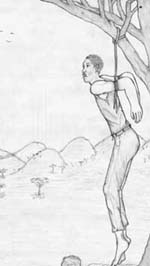
The "Jesus Christ" Method
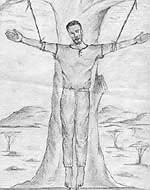
Description: The victim is stripped to the wrists, wrists tied, and standing on a block with hands tied to a tree branch. the block is removed, leaving the victim suspended with the feet just off the ground in a crucifix-like posture. Beatings are inflicted on a bare back. This is said to be an extremely severe torture, restricted to only 10-15 minutes to avoid serious lasting injury This method was first reported from Adi-Abeto prision in 2003
- Source column 1, spans 3 columns
The "Helicopter" Method
- Source column 1
Description: The victim is tied with rope by hands and feet behind the back, lying on the ground face down, outside in the hot sun, rain or freezing cold nights, stripped of upper garment. This is a punishment allocated for a particular number of days, the maximun reported being 55 days in the Dahlak Kebir island prison, but it is more often one or two weeks. The Prisoner is tied in this postion 24 hours a day, except for two or three short breaks for meals and toilet function
- Source column 3
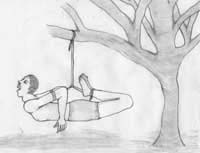
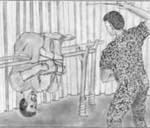
The "Torch" or "Number Eight" Method
Description: The victim is tied up by wrists behind the back and with the feet bound; a stick is placed under the knees and supported on a framework on both sides horizontally, and the body is turned upside down with feet exposed. The soles of the feet are beaten with sticks or whipped. The above illustrations was drawings by a former detaineee showing torture methods used by Eritrean security forces. © Private Ermias.
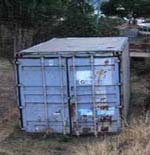
Metal shipping containers,
Typical shipping container, as used for imprisonment© Compass Direct
Description: Metal shipping containers, brought from Assab and Massawa ports and used elsewhere for ordinary purposes such as for storage or even as shops, offices or homes, are now widely used to accommodate the expanding number of prisoners and also for punishment purposes. They have been reported at Sawa military training centre (where 57 religious prisoners were held in containers in mid-2003), Adi Abeto prison, Dahlak Kebir prison, Mai Serwa, Alla near Decamare, Mai Edaga near Decamhare, Mai Temenei in Asmara, Tehadasso army prison, and other prisons.
Source for all the above descriptions is excerpted from AI report